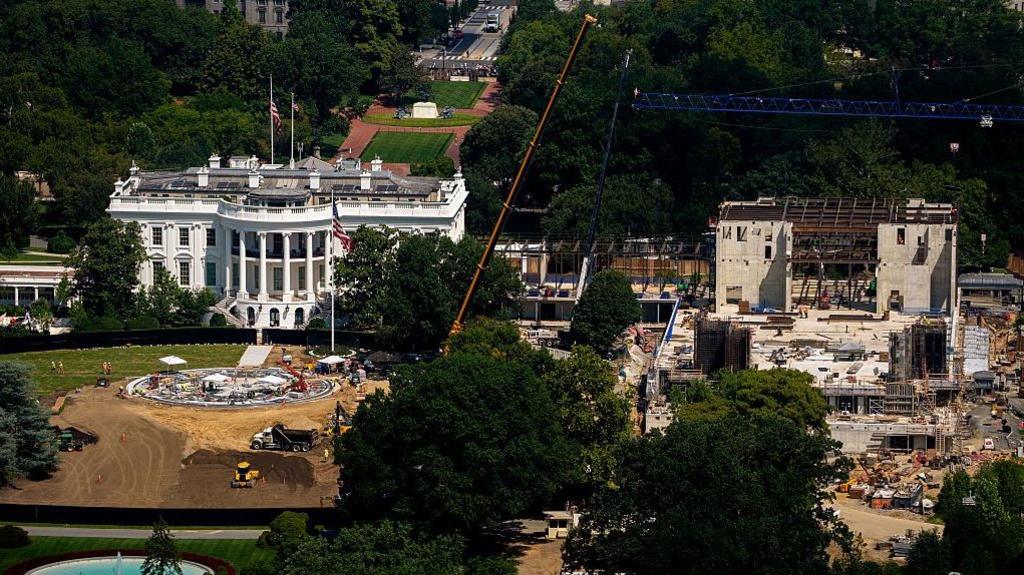
U.S. Supreme Court decision cleared the way for President Donald Trump to proceed with his project to rebuild an expanded ballroom in the White House, a long‑contested construction scheme that has been at odds with historic preservation advocates.
The Court’s 5‑4 ruling granted the Trump administration’s emergency request, blocking a lower court order that would have halted the above‑ground portion of a $400 million (£297 million) theatre‑style venue. The national protest group National Trust for Historic Preservation had argued that the president lacked unilateral authority to alter the executive’s residence on federal grounds.
Trump demolished the historic East Wing late last year to begin construction; the project carries military facilities and is deemed one of the largest interior upgrades to the White House since the 1930s. It is intended to expand event capacity and address security concerns.
The Court’s unsigned order noted that the executive could likely prevail because the Trust failed to establish standing and that the administration faces irreparable harm if a stay is not granted. Chief Justice John Roberts, who voted with the three liberal justices, had earlier stated that construction was likely unlawful, citing the absence of explicit congressional authority.
The decision raises questions about the limits of executive power on federal property and the role of historic preservation in shaping the nation’s most emblematic residence.