Supreme Court Upholds Trump’s $400 m White House Ballroom, Sparking Debate Over Historic Preservation
The U.S. Supreme Court’s latest decision clears the way for President Donald Trump’s $400 million ballroom project—an ambitious redesign of the former East Wing of the White House that has long been a point of contention among preservationists, lawmakers, and the public.
In a 5‑4 ruling, the justices granted the administration an emergency stay that temporarily lifted lower‑court orders that would have halted construction of the 90,000‑square‑foot, 8,400‑square‑meter ballroom. Chief Justice John Roberts, joined by three liberal justices, dissented, asserting that “construction is likely unlawful because Congress has not approved the project.”
The National Trust for Historic Preservation (NTHP) was the primary plaintiff, arguing that the President’s unilateral authority to demolish and rebuild historic spaces lacked legal backing. The court, however, concluded the NTHP “lacks standing” to sue the government and that the administration was likely to succeed in its claim that it would suffer irreparable harm without a stay.
The ruling follows the Trump administration’s demolition of the historic East Wing last autumn in preparation for the new ballroom. Officials say the construction will be “substantially” finished by November and fully completed by August 2028, a timeline that has fueled concern among preservationists and members of Congress.
President Trump applauded the decision, posting that he was “pleased” the “baseless” lawsuit had failed to halt construction. He framed the ballroom as part of a broader initiative to upscale Washington’s public spaces, citing security needs after an alleged assassination attempt at the 2025 White House Correspondents’ Association dinner.
The project, which also includes a helipad on the South Lawn, remains a flashpoint for debates over presidential power, historical preservation, and urban development. Critics note that the redesign could erase essential elements of the national heritage, while supporters argue the space is essential for national function and security. The Court’s split decision underscores the ongoing balance between executive initiative and congressional oversight in shaping the nation’s iconic symbols.
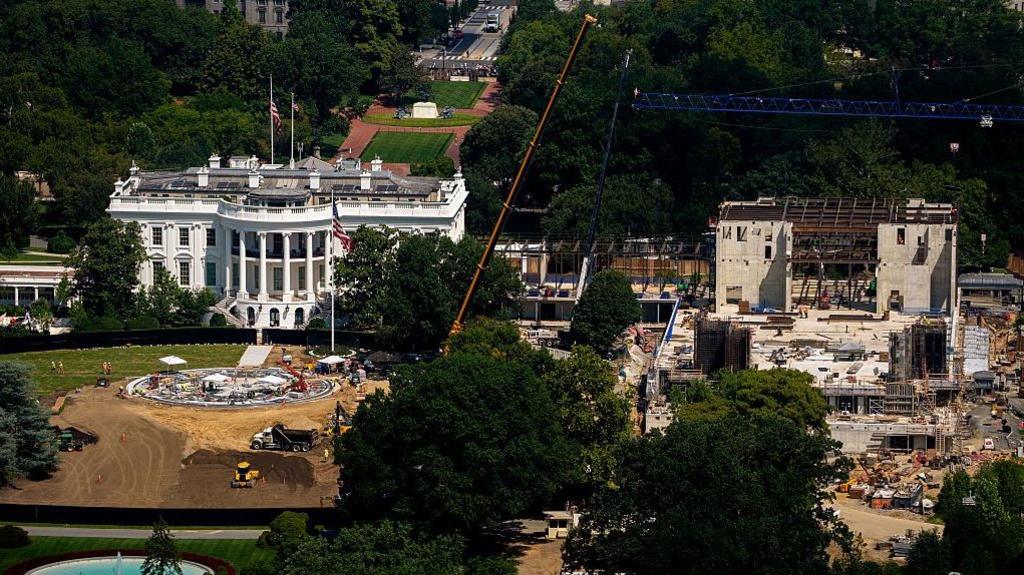
Image caption: Construction continues on a new helipad on the South Lawn of the White House and the East Wing ballroom on 24 August 2026 in Washington DC.