In brief
A 38‑year‑old Cuban dissident who led the San Isidro Movement left Cuba for the United States after spending five years in a high‑security prison. Otero Alcántara, jailed for his role in the country’s most extensive anti‑government protests, has now joined a growing exodus of activists. His departure has amplified tensions in U.S.‑Cuba relations, drawing remarks from Secretary of State Marco Rubio. Cuban officials allege that the San Isidro Movement is funded by Washington—a claim the group denies. The exodus underscores Cuba’s ongoing struggle for freedom of speech and democracy amid sanctions and pressure from the U.S.
Luis Manuel Otero Alcántara, 38, who led Cuba’s San Isidro Movement—a group of artists, journalists and intellectuals advocating for free speech—has fled the island nation for the United States after spending five years in the high‑security Guanajay prison.
Otero was arrested in 2021 during Cuba’s largest anti‑government protests in decades. While his whereabouts were unclear, Cuban authorities kept him in an undisclosed facility until the U.S. approved his parole request.
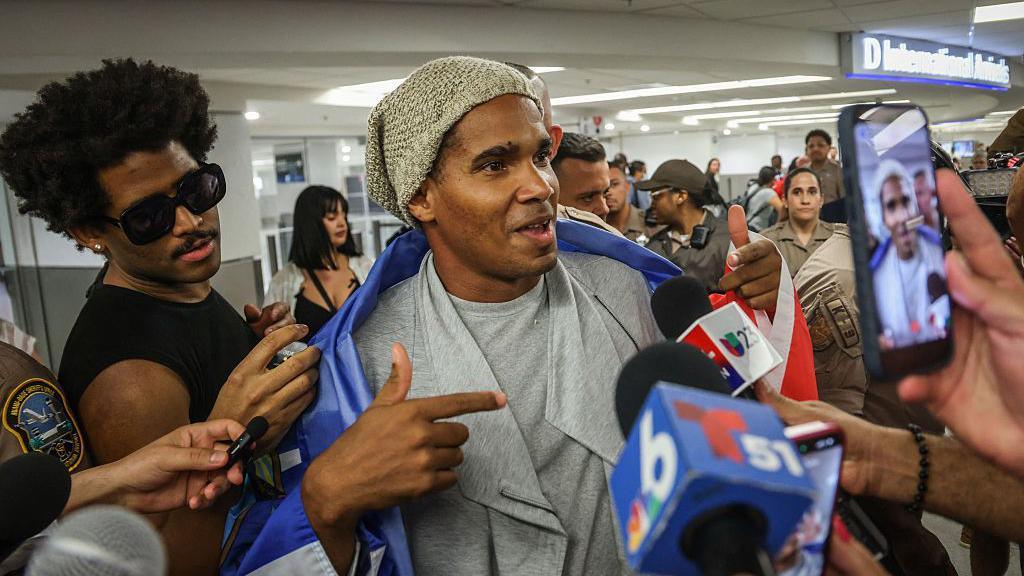
He emerged at a Miami airport, where supporters sang the Cuban anthem as he raised a hand gesture signifying “L” for “Libertad” (freedom). In a statement to journalists, he declared that the Cuban dictatorship and the Castro dynasty must end because corruption persists when the family holds power.
Cuban officials allege that the San Isidro Movement receives financial backing from Washington and is used to subvert the state—claims the movement denies. Many members report constant surveillance by security forces and arbitrary detentions.
U.S. Secretary of State Marco Rubio praised Otero’s “criminal” commitment to speaking out. The case, along with that of fellow San Isidro member Maykel Castillo, has strained diplomacy between Havana and Washington. Recent U.S. moves—oil blockades, sanctions, and potential military options—fueled tensions, although no definitive military action has been decided.
The decision to exile takes place against the backdrop of rising U.S. oil sanctions, an ongoing Cuban fuel crisis, and a marked drop in tourism, which fell nearly 60% this year compared to 2025.
As hostages in a long‑running struggle for democratic freedoms, Otero’s departure signals both the personal cost to Cuban activists and the International community’s ongoing efforts to hold the Cuban regime accountable.