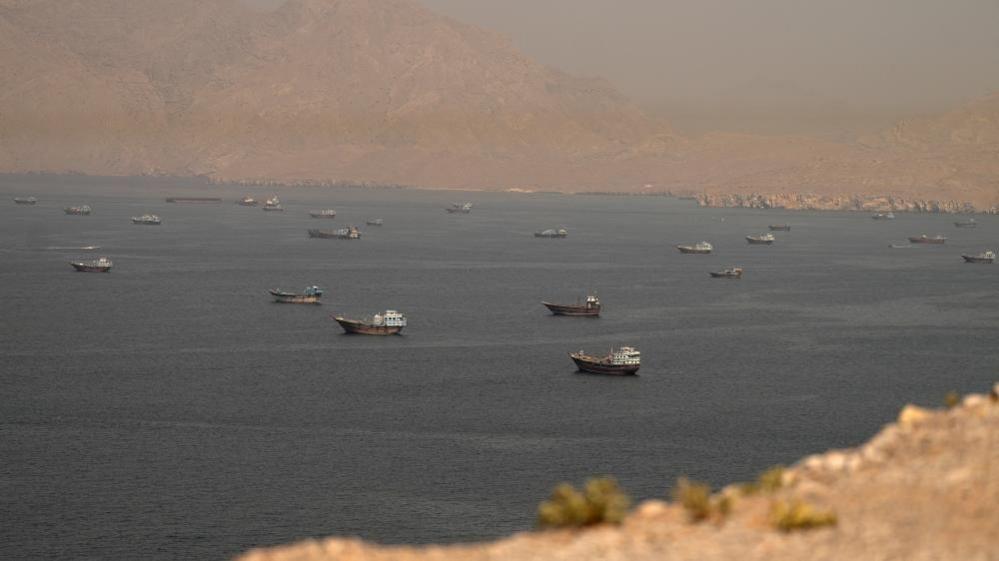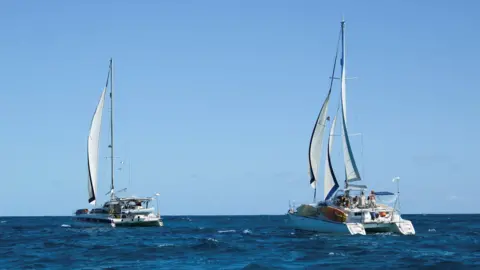
Two boats filled with humanitarian supplies travelling from Mexico to Cuba have been located days after contact with them was lost in the Caribbean, organisers say.
The boats were located by the Mexican Navy and the crews are safe, a spokesman for the Nuestra America Convoy said.
He did not explain why the two boats - the Friendship and Tigger Moth - had disappeared.
They are among several vessels that have sought to carry supplies to the island nation since the US imposed an oil blockade in January, prompting a chronic fuel shortage.
The Mexican Navy has not commented on how it located the boats, which departed Isla Mujeres, in Mexico's easternmost state of Quintana Roo, on 20 March, and had been due to arrive at their destination on Monday or Tuesday.
There are nine crew members - from Poland, France, Cuba and the US - on board.
The vessels are continuing their journey to [the Cuban capital] Havana, the Nuestra America Convoy spokesman said.
The convoy remains on track to complete its mission - delivering urgently needed humanitarian aid to the Cuban people.
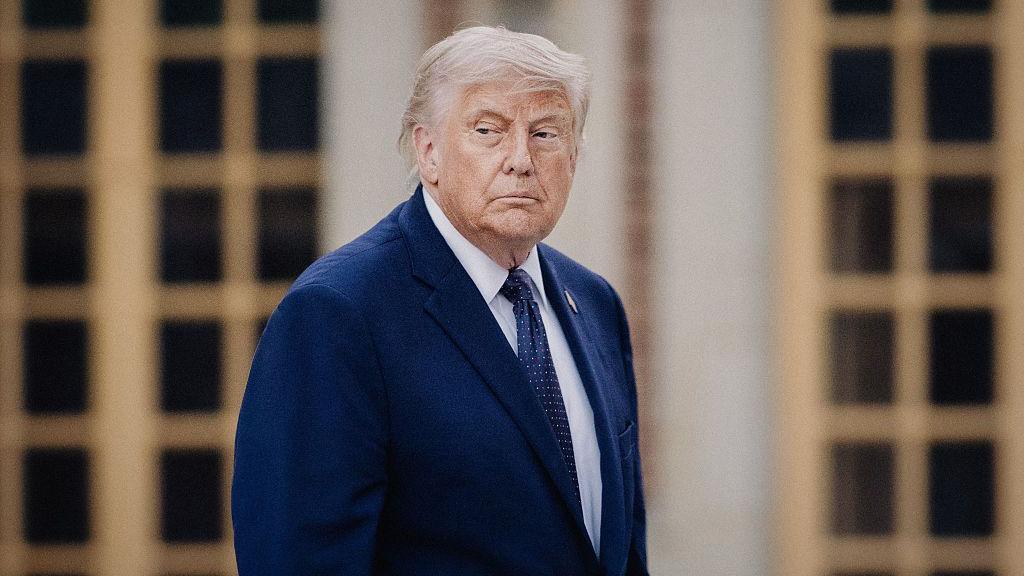
Volunteers and non-governmental organisations have largely spearheaded efforts to deliver humanitarian aid to Cuba since US President Donald Trump's oil embargo on the communist-run country began.
The UN has warned Cuba faces dire supply shortages, with more than 50,000 surgeries cancelled in Cuba as fuel supply constraints and ageing infrastructure have caused multiple nationwide blackouts.
Coupled with shortages of food and medicine, the situation has triggered rare public dissent in the form of street protests.
Earlier in the week, the Cuban government celebrated and warmly received another boat that had carried 14 tonnes of humanitarian aid to the island.
The vessel, dubbed Granma 2.0 after the boat in which [late Communist leader] Fidel Castro returned to Cuba to launch its 1950s revolution, delivered solar panels, medicines, baby formula, bicycles and food.
Since the US seized former Venezuelan President Nicolás Maduro in January and cut off the supply of oil, Trump has turned his attention to the Caribbean island.
He has threatened tariffs on any country supplying oil to Cuba, has spoken of a friendly takeover of the nation and has urged it to make a deal or face unspecified consequences.
The Cuban government has confirmed it is in talks with the US to resolve their differences, but has insisted that the political system of Cuba is not up for negotiation.
On Friday, US Secretary of State Marco Rubio emphasized that the system in Cuba had to change for a better future.
He denied the existence of a naval blockade around the island and attributed Cuba's shortage of oil and fuel to its refusal to seek payment, asserting that sustainable support typically requires a negotiated exchange.
Rubio also addressed the infrastructure issues plaguing Cuba, claiming that outdated equipment from the 1950s compounded the nation’s energy crisis.