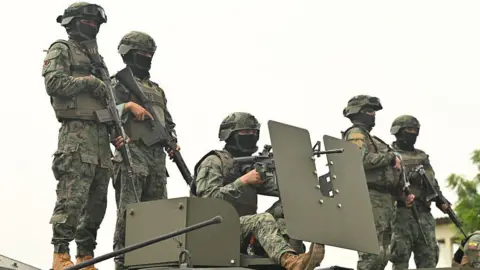
The Ecuadorean government has deployed more than 75,000 police officers and soldiers to four of the country's most violence-wracked provinces, as reported by the interior minister. Authorities have also declared a night-time curfew in these areas, marking a 'new phase' in their ongoing 'war' against criminal gangs.
Since taking office in November 2023, President Daniel Noboa has aimed to quell drug-related violence, yet Ecuador recorded a shocking murder rate in 2025. Noboa has also joined a US-led alliance of 17 nations to combat criminal cartels within the Western Hemisphere.
'We're at war,' Ecuadorean Interior Minister John Reimberg addressed residents of El Oro, Guayas, Los Ríos, and Santo Domingo de los Tsáchilas. He urged locals, 'Don't take any risks, don't go out, stay at home.'
Strategically positioned between Colombia and Peru—both major coca producers—Ecuador has become a crucial transit country for drug trafficking. Current estimates suggest that around 70% of the cocaine produced in Colombia and Peru passes through Ecuador before reaching its final destination.
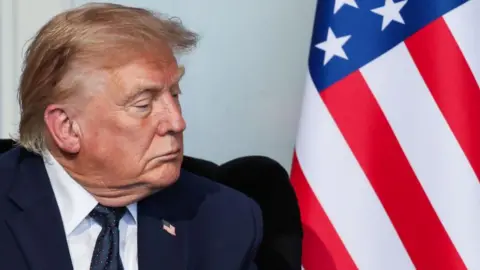
The Noboa administration is working closely with the US to stem cocaine exports, including recent collaborative operations like the establishment of the FBI's first office in Ecuador. This partnership aligns with broader initiatives to combat the drug trade, culminating in the 'Shield of the Americas' summit hosted by former President Donald Trump.
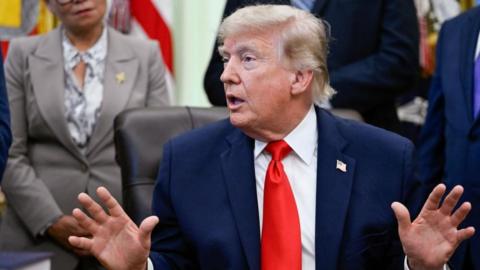
At this summit, Trump likened criminal organizations to a 'cancer' and emphasized the necessity of military force, a sentiment echoed by Noboa as he actively seeks to dismantle criminal networks in his country.
Despite these measures and several declared states of emergency, the murder rate surged over 30% between 2024 and 2025, prompting a desperate need for decisive action against entrenched criminal operations.