
In brief
On the tenth anniversary of the devastating Bataclan attacks, France faces renewed concerns over jihadist extremism following the arrest of a woman linked to the last surviving attacker. Authorities continue to combat persistent radicalization and home-grown terrorism while reflecting on the enduring impact of the November 2015 attacks.
Just as France marks the 10th anniversary of the Bataclan massacres, another reminder has come of the permanence of the jihadist threat.
A former girlfriend of the only jihadist to survive the November 2015 attacks has been arrested on suspicion of plotting her own violent act.
The woman - a 27 year-old French convert to Islam named as Maëva B - began a letter-writing relationship with Salah Abdeslam, 36, who is serving a life sentence in jail near the Belgian border following his conviction in 2022.
When prison guards discovered that Abdeslam had been using a USB key containing jihadist propaganda, they traced its origin to face-to-face meetings that the prisoner had with Maëva B.
Detectives then looked into Maëva B's own computer and telephone, where they found evidence she may have been planning a jihadist attack, and on Monday she was placed under judicial investigation along with two alleged associates.
With France commemorating 10 years since the worst attack in its modern history, the arrest has focused minds on the enemy that never went away.
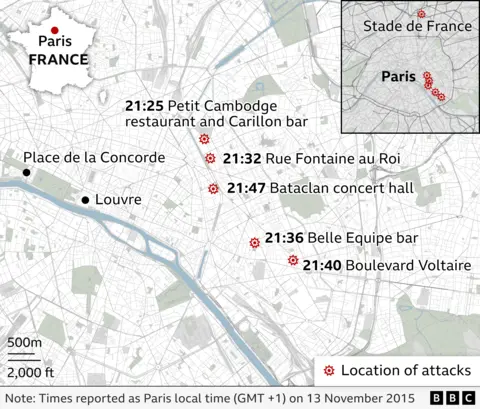
On the evening of 13 November 2015, jihadist gunmen and suicide bombers conducted a sequence of co-ordinated attacks that culminated in a bloody raid on the Bataclan concert hall in eastern Paris. Overall 130 people were killed, 90 in the Bataclan, and more than 400 treated in hospital.
The Bataclan attackers were young men of mainly North African origin, recruited in Belgium and France, trained in IS territory in the Middle East, who then returned to Europe hidden among a vast flow of migrants.
Ten years on, much has changed, but experts warn that the threat now comes from what is termed 'ambient jihadism'. The current political crisis in France is also heightening fears of escalating violence as divisions widen within the society.
As commemorations take place, with memorials and tributes across the country, insights from survivors underscore the lasting impact of that fateful night and the journey of healing in the wake of terror.