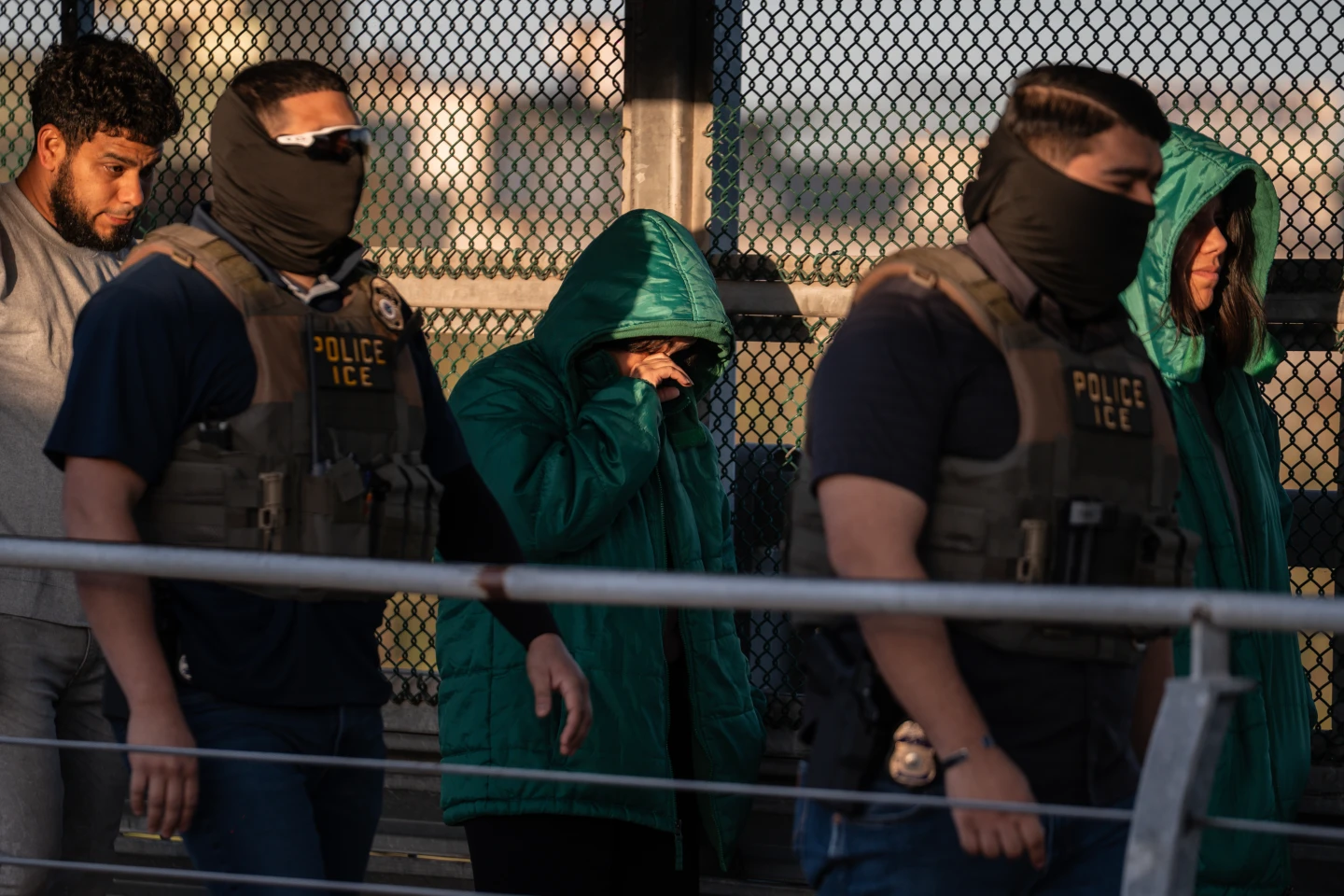
WASHINGTON (AP) — The Department of Homeland Security is poised for new leadership that could either recalibrate President Donald Trump’s immigration agenda or further bolster his ambitious mass deportation promise.
The White House's political strategists have recently urged party lawmakers at a retreat held at Trump’s resort in Florida to emphasize immigration enforcement focused on criminals, marking a potential shift from the previously highlighted mass deportation agenda. House Speaker Mike Johnson admitted that such aggressive operations have posed challenges for the party, necessitating a strategic course correction.
However, it appears the mass deportation initiative is escalating rather than waning, with significant funding aimed at recruiting Immigration and Customs Enforcement personnel and constructing detention facilities, reflecting ambitions to remove approximately one million immigrants from the U.S. in the current year.
Sarah Mehta from the ACLU commented, “We are at a pivotal time where mass detention and deportation are finally being scrutinized.”
The intense scrutiny faced by President Trump’s immigration policies has converged on Capitol Hill. Senators are preparing to interrogate Trump's nominee for DHS, Senator Markwayne Mullin of Oklahoma, during upcoming confirmation hearings, emphasized by previous controversies surrounding extensive deportation sweeps that led to tragic outcomes, including the deaths of U.S. citizens.
In the House, bipartisan concerns are emerging regarding Trump's current immigration policies, with some advocating a more humane approach to dealing with immigrants who contribute to the economy. The tension within the Republican Party signifies a growing divide between traditional hardline stances and a call for reform.
The push for mass deportation remains contentious; some conservatives argue it is essential to fulfill Trump's promises that won him the presidency last election. Meanwhile, Republican leaders face mounting opposition from within, as various factions contemplate the implications of continuing strict deportation policies versus adopting a less stringent, more humane outreach.
The future of immigration policy under the new DHS leadership is uncertain, as it mirrors broader societal debates about the role of America as a nation of immigrants amidst stark, sometimes controversial enforcement strategies.
As the landscape of immigration in America evolves, all eyes are on how these leadership changes will influence the ongoing battle over immigration reform.