In brief
A team from the University of Washington recently deployed over a mile of fiber-optic cable in the Salish Sea to create an underwater listening network for monitoring orca communication. Utilizing Distributed Acoustic Sensing (DAS) technology, the experiment aims to identify how orcas respond to environmental stressors such as ship traffic and food scarcity. Successfully developing this network could provide vital real-time data for conservation efforts aimed at protecting the dwindling orca population, currently at about 75 individuals.
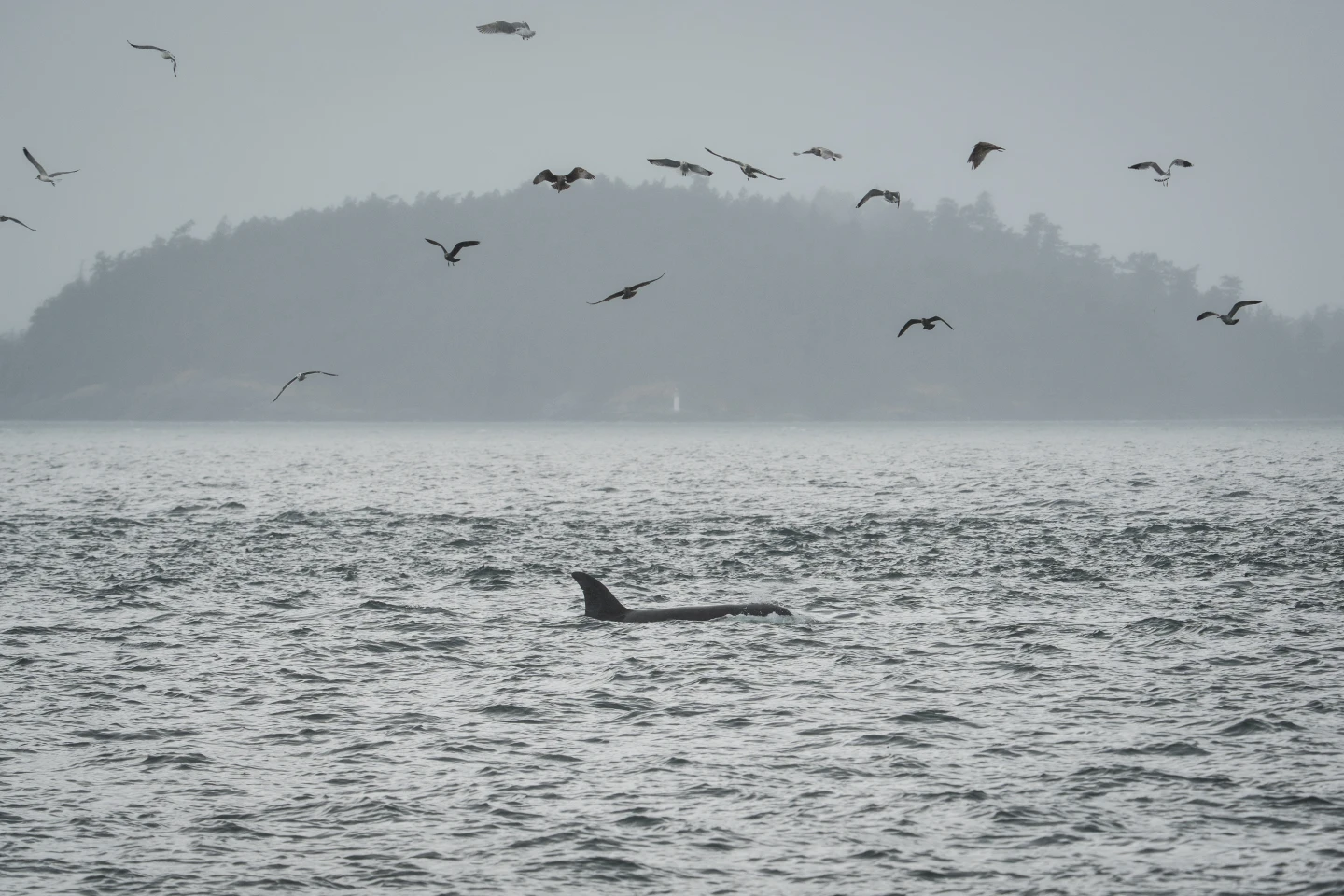
SAN JUAN ISLAND, Wash. (AP) — As dawn broke over San Juan Island, scientists released a mile of fiber-optic cable into the Salish Sea, aiming to capture the sounds of endangered orcas. This innovative approach uses the same technology that allows internet data to convert existing underwater cables into a vast listening network. The aim is to understand how these whales react to ship noises, food availability, and other stresses.
The technique, known as Distributed Acoustic Sensing (DAS), provides more precise measurements than traditional monitoring methods, allowing researchers to track orca movements and vocalizations continuously.
This research is particularly crucial as the Southern Resident orca population is threatened, primarily due to dwindling salmon stocks, noise pollution, and chemical contamination in their habitat. By utilizing existing web of underwater cables, scientists hope to gather crucial data that could enhance conservation strategies under the looming threat of climate change.