Japan’s key security adviser, Defence Minister Shinjiro Koizumi, told the BBC that a new, more vigorous defence posture is essential to prevent war in a region where China’s military presence has expanded sharply and North Korea continues missile tests.
Koizumi stressed that revamping Japan’s “pacifist posture” is not about aggressive rearmament, but creating a multi‑layered deterrence that keeps “no new war” a reality. He highlighted the ministry’s recent decision to relax decades‑old export rules so that Japan can now sell or transfer lethal weapons to 17 partners – from the United States to the United Kingdom, Australia, and other Indo‑Pacific states.
The minister also noted Japan’s plan to invest newly available defence budgets – now slotted at 2 % of GDP – into advanced surface‑to‑ship missiles, unmanned drones, and the development of indigenous defence manufacturers. This dual focus on technology and industry aims to boost Japan’s competitiveness in the global defence market while ensuring that the Self‑Defence Forces (SDF) can operate with “pride and honour.”
Koizumi’s call echoes Prime Minister Sanae Takaichi’s long‑standing push to amend Article 9 of Japan’s post‑war constitution. Takaichi, who assumed office in October 2025, has already raised defence spending to twice the post‑war benchmark, intensifying domestic debate. Some historians, such as Nick C. Okane, note that this trend of constitutional shift is part of a broader pattern dating back to the 1950s, when Japan’s critics and advocates of a normal military stance first took the floor.
Critics argue that formally recognising or expanding the SDF could sever Japan’s pacifist identity. A senior research fellow, Hirohito Ogi, believes the current constitution suffices for defensive needs, seeing the reforms as a “political agenda” rather than a military necessity. Others, however, see the current security environment – with China’s first island chain flanked by disputed island territories and the rapid increase in ballistic missile tests – as forcing Japan to consider more robust, agile forces.
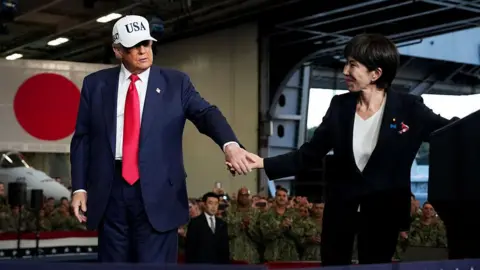
The US remains a central pillar of Japan’s security. Despite a new U.S. policy calling for burden sharing, four 2025‑2026 President Trump remarks emphasized that allies should contribute more to their own defence. Yet Japan remains a crucial U.S. ally that hosts the largest overseas U.S. military deployment, with 50,000 troops stationed in the country. Koizumi noted this bond, stating that “Japan can make contributions to regional security that are uniquely Japanese – not solely through our relationship with the United States, but also through an independent role.”
At the same time, Japan seeks to maintain open dialogue with China. Koizumi asserted he met with his Chinese counterpart in November, and urged continued engagement. Nonetheless, rise in tensions – such as Chinese aircraft carriers moving beyond the Senkaku island chain – underscores the precarious balance Japan must strike with China while protecting domestic interests.
Public sentiment remains divided. Recent anti‑war protests, the largest since the 1980s, reflect deep unease about Japan’s potential militarism. The debate has rocked political parties: while the Liberal Democratic Party pushes for reform, opposition groups fear the erosion of pacifist tradition. The outcome will ultimately be decided in a national referendum, according to Koizumi, who encourages “the decision to move forward rests firmly in the hands of people.”
Japan’s strategy has implications beyond borders. Japanese shipbuilding, electronics, and new defence firms could benefit from the growing demand, with analysts predicting a rise in Japan’s share of the global defence market. But proponents of deeper reforms argue that merely upping budgets and updating strategy documents is insufficient without structural changes to enhance speed and adaptability.
As Japan navigates this complex terrain, the country faces three key questions: Can it uphold its historical pacifist promise while bolstering deterrence? Will the reforms pass a national referendum? And can a balanced relationship with China and unwavering partnership with the United States coexist? The answers will shape not only Japan’s future, but also the stability of Asia’s strategic environment.