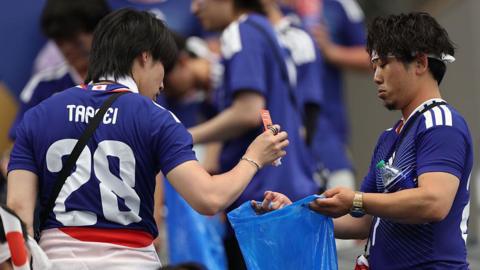
Japanese football fans have earned wide praise for their sweeping of stadiums after World Cup matches — a clean‑up tradition widely admired as a display of civic pride.
This week, however, that applaud came with a sting. Viral social media posts have exposed a perceived double standard: men excused for tossing garbage in public but left to shoulder the domestic load at home.
A striking meme showed a man collecting litter in the stands, then relaxed on a sofa with his phone hovering over a pile of laundry, while his wife sorted dishes. The accompanying text urged men to "pitch in more at home" as their household time is the lowest among highly‑developed nations.
Commentators noted the stark disparity in domestic labour. OECD figures from 2021 report that Japanese women spend over three hours a day on unpaid work, more than five times the 47 minutes that men invest.
In dual‑income households with children under six, the gap widens further: women hour more than seven hours a day, men less than two. Critics of the clean‑up trope highlight that, while public spaces are kept tidy, private spaces often accumulate clutter.
Despite backlash, many argue Japanese fans’ stadium clean‑ups should be cherished, not condemned. In fact, the tradition has crossed borders: Portuguese fans have recently been filmed clearing stands in a similar vein, showcasing the cultural export of Japan’s civic ethos.
Proponents maintain that “clean up” habits reflect Japan’s deep respect for public order and that the conversation should not eclipse the broader dialogue on gender‑led household segregation.
As the debate over domestic labour persists, the image of fans sweeping the stands remains a powerful reminder of civic responsibility and a call to ensure the same reverence is shared at home.