In brief
A record from 75,000‑year‑old Neanderthal remains uncovered in Shanidar Cave, Iraqi Kurdistan, shows a round hole in a shoulder blade that scientists believe was made by a sharpened wooden spear. The wound points to lethal interpersonal violence and may have been a deliberate heart shot. While some argue it could be a hunting accident, experts consider an attack by a rival far more plausible. This find joins a small but growing set of evidence that violent encounters among early humans were more common and far older than once thought, extending back well before the advent of agriculture.
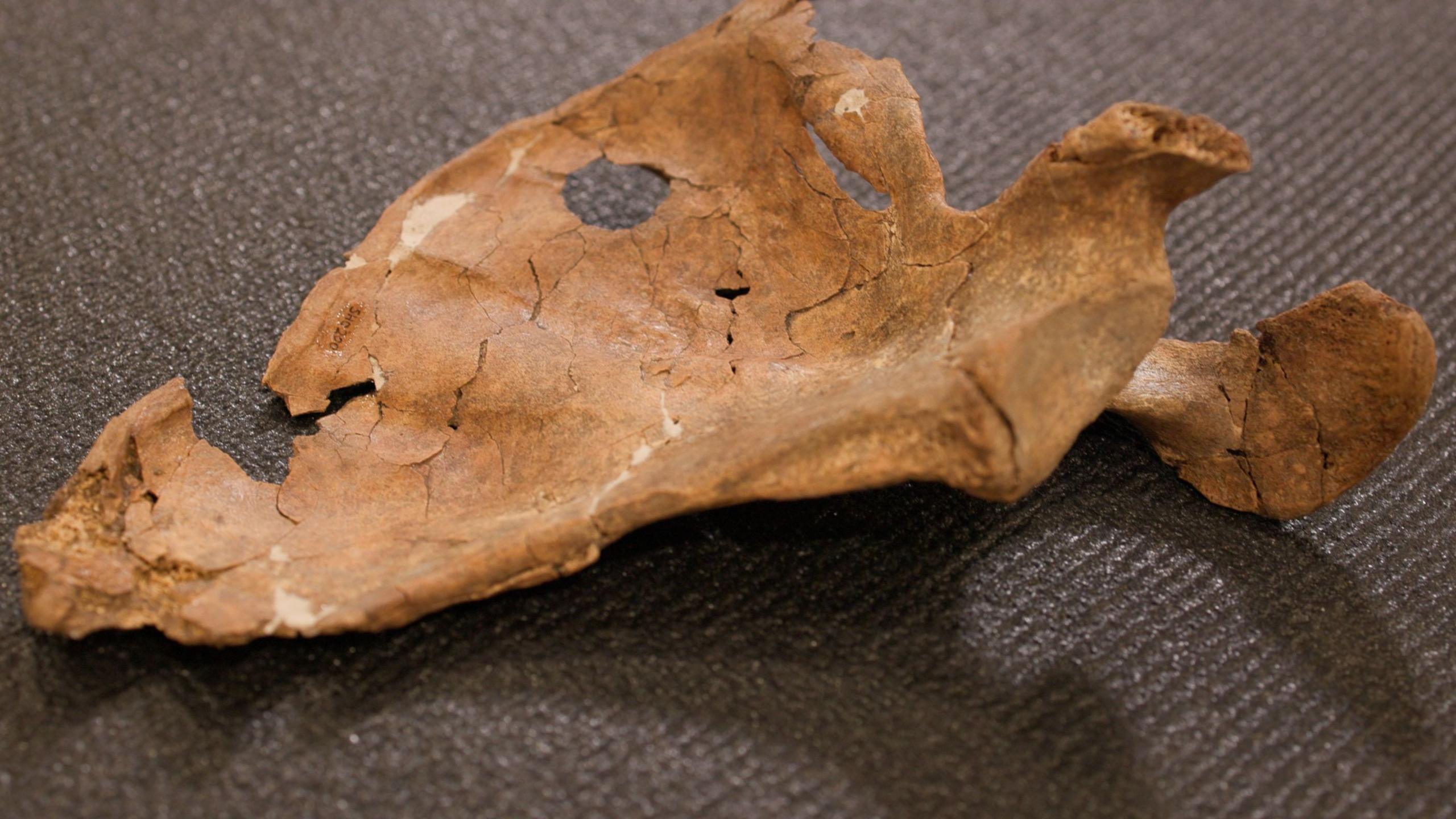
A 75,000‑year‑old Neanderthal buried in a cave in Iraqi Kurdistan may have been struck in the chest by a sharpened wooden spear. The evidence is a 15mm round hole in a left shoulder blade that was recovered during the 1950s Shanidar Cave excavation.
Researchers from the University of Cambridge, led by Dr Emma Pomeroy, argue that the wound’s shape and angle indicate that the spear entered the body’s chest area, likely damaging the lungs and major blood vessels, then exited through the shoulder blade. They say it may have been a purposeful “heart shot.”
The hole is unusually circular, a feature reproduced in experiments with reconstructed wooden spears. The team cautions that while the wound could result from a hunting accident or friendly fire, the positioning makes an interpersonal attack the more likely scenario.
Prof Chris Stringer of the Natural History Museum in London, who followed the work but was not involved, wrote that the wound’s trajectory is consistent with violence rather than accidental injury: "The researchers leave it open whether this resulted from a hunting accident or interpersonal violence, but in my view the latter seems more likely."
These findings echo earlier Shanidar discoveries where a 50,000‑year‑old Neanderthal’s ribs showed signs of a healed wound, believed to have been caused by a stone‑tipped spear. Together they suggest lethal confrontations were not exclusive to later, settled societies.
The idea of ancient violence is further bolstered by a 2022 study of Neanderthal skulls in northern Spain’s “Pit of Bones” site, where 57 healed head injuries and eight potentially fatal fractures were documented among 20 individuals. Researchers concluded that deliberate blows, possibly fought over territory or resources, were common.
These discoveries challenge the prevailing view that organized warfare began only with farming. They point to a brutal reality in hunter‑gatherer societies, with individual killings predating settled life by hundreds of thousands of years.
This article is updated live. Report new evidence or comment on the findings through the PulseWire discussion panel below.