In brief
In the wake of Trump's recent comments, there's an urgent need to evaluate how his relationship with Putin impacts global diplomacy.
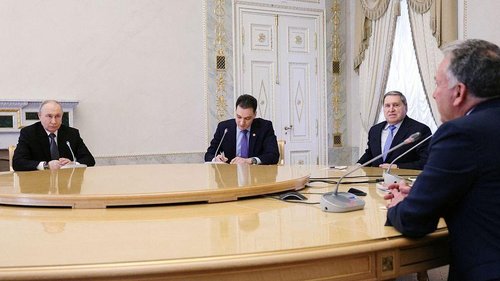
The Russia-Ukraine war has reignited debates over Trump's affinity for Putin, with implications for international security and domestic policy. In early 2017, U.S. intelligence agencies presented a stark conclusion regarding Russian President Vladimir V. Putin’s strategy during the presidential election, indicating an intent to weaken American faith in democratic processes and disrupt the U.S.-led liberal order. The assessment asserted that Russia worked to bolster Trump's election chances. Fast-forward to 2025, Trump’s recent remarks during a meeting with Ukrainian President Voldymyr Zelensky reflect his unchanged narrative on the matter, dismissing concerns of Russian interference as a fabricated “witch hunt.” Maintaining his view that both he and Putin were victims, Trump stated, “Let me tell you, Putin went through a hell of a lot with me.” This perspective underscores a significant alignment with Putin, reinforcing their common cause against shared adversaries, which includes opponents in Congress and within the so-called "deep state" of U.S. governance. For years, the relationship between Trump and Putin has been closely monitored through a flurry of investigations and media scrutiny, yielding various theories regarding Trump’s draw toward the Russian leader whose ambitions often clash with U.S. interests. Since returning to office, Trump's actions in terms of national security and foreign policy have notably found favor with the Kremlin, which raises alarms about the implications for U.S. foreign relations. As experts continue to examine this complex relationship, the reality remains that Trump's interactions with Putin could maneuver critical shifts in international diplomacy, making this bond escalatively impactful on both a national and global scale.