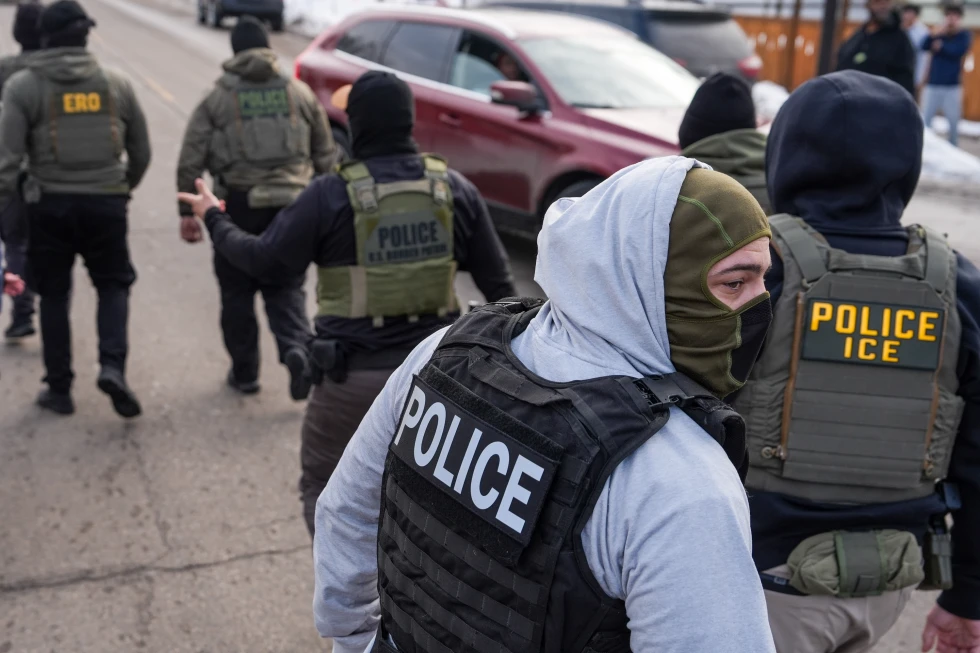
WASHINGTON — The visibility of masked federal officers has become a central point of contention amid immigration enforcement operations during the Trump administration. Critics argue that this practice erodes trust and accountability between law enforcement and communities, while supporters assert that it protects personnel from potential threats.
As legislators grapple with Homeland Security funding ahead of an impending deadline, one divisive issue looms: whether to mandate that these officers reveal their identities.
Former Colorado sheriff Justin Smith called the practice unsettling, suggesting it leaves both officers and civilians uncomfortable in interactions. On one hand, proponents cite online harassment as a justification for masking, while opponents raise concerns about the climate of fear it creates amongst communities.
The phrase 'Cameras on, masks off' has gained traction among Democrats seeking to ensure accountability in these operations. Majority Leader Hakeem Jeffries deemed unmasking agents a non-negotiable aspect of upcoming discussions regarding Homeland Security's budget.
ICE maintains that masks are critical for the officers' protection, asserting their readiness to identify themselves in lawful encounters. However, this assertion has led to a proliferation of public discontent and demands for reform.
Pundits suggest a potential compromise could involve the use of masks alongside identifiable badges, a middle ground that maintains some semblance of anonymity while fostering public accountability. Nevertheless, advocates are pushing for broader reforms, including requiring judicial warrants for immigration enforcement actions and limiting the scope of enforcement operations based on race or language.
In a polarized political climate, the debate over masked enforcement raises questions about the future of accountability, community relations, and the fundamental rights of individuals within the immigration system. The stakes are particularly high as public sentiment continues to evolve.