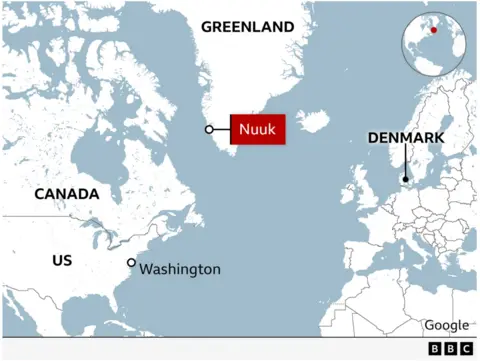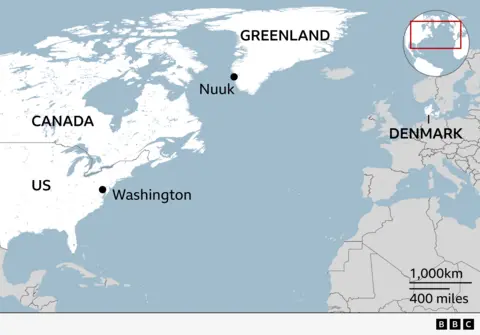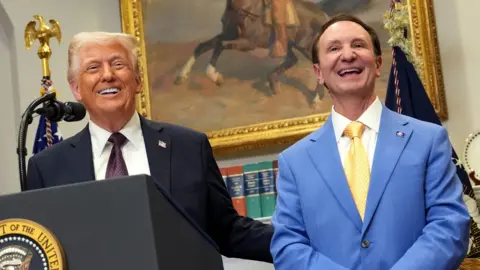
Donald Trump has sparked a fresh row with Denmark after appointing a special envoy to Greenland, the vast Arctic island he has said he would like to annex.
In response to a question from the BBC about the new role of Jeff Landry, the Republican governor of Louisiana, Trump stated that the U.S. needed Greenland for national protection and that we have to have it.
Landry is set to lead the charge as special envoy to Greenland, a semi-autonomous part of the Kingdom of Denmark.
This move has angered Copenhagen, which has announced it would call the U.S. ambassador for an explanation. Greenland's Prime Minister asserted that the island must decide our own future and refrained from endorsing any desire to become part of the U.S.
Governor Landry expressed on social media that it was an honor to serve in a position aimed at making Greenland a part of the U.S. since Trump returned to the White House, reviving proposal interests due to the island's strategic location and mineral wealth. Trump emphasized the need for Greenland in the context of national security, citing potential threats from Chinese and Russian ships in nearby waters.
Greenland, which has had extensive self-government since 1979, has consistently shown opposition to becoming part of the U.S., despite Trump's past attempts to purchase the territory that were firmly rejected by both Denmark and the Greenlandic government.
Reacting to the appointment, Denmark's Foreign Minister described the move as deeply upsetting, reminding that actions undermining Denmark's territorial integrity would not be tolerated. The island’s Prime Minister also noted, Greenland belongs to Greenlanders, and territorial integrity must be respected.
The EU Commission President offered full solidarity with Denmark, stressing the importance of respecting Greenland's territorial rights amid growing strategic competition in the Arctic.
The implications of this appointment could reshape U.S.-Danish relations as Trump appears determined to exert influence in the Arctic region. Envoys like Landry hold informal positions, requiring no host country approval, which reflects the larger context of U.S. ambitions in the region.