We're driven blindfolded to a secret location where Ukraine is making one of its latest weapons. We're instructed to turn off our phones - such is the secrecy around the production of Ukraine's Flamingo cruise missile.
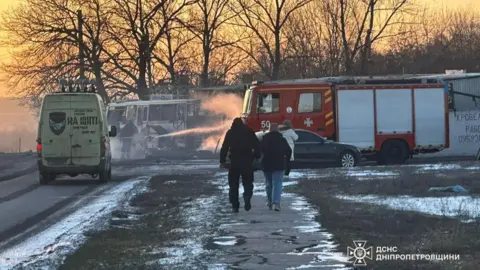
For Ukraine, dispersing and hiding the production of weapons like this is key to survival. Two factories belonging to the manufacturer, Fire Point, have already been targeted.
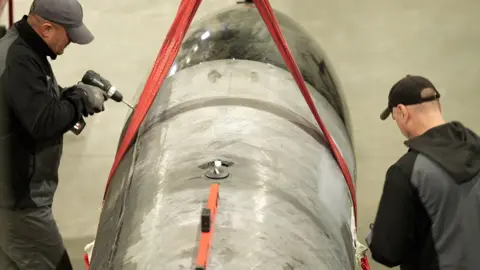
Inside, we must not film any features such as pillars, windows, or ceilings, nor show the faces of workers on the assembly line crafting various stages of the Flamingo missiles.
Despite the ongoing conflict, Ukraine is accelerating its arms industry. President Volodymyr Zelensky states that over 50% of the weapons used in the war now originate domestically, with a significant portion of long-range armaments being produced on home soil.
Initially reliant on old Soviet-era resources, Ukraine has seen substantial military modernization thanks to Western support. However, it has also emerged as a leader in the development of unmanned systems like drones.
The new Flamingo missiles are a critical addition to Ukraine's expanding long-range capabilities.
Iryna Terekh, chief technical officer at Fire Point, notes that the Flamingo’s design is marked by its black paint, a symbolic choice suggesting it 'eats Russian oil'.
The Flamingo missile boasts a striking resemblance to World War Two’s German V1 rocket with a large jet engine atop a body akin to a London bus. Combat testing has begun, although the specifics remain under wraps.
This type of missile plays a vital role in modern warfare, filling a gap for capabilities that Western allies have been hesitant to provide, particularly given its potential range of 3,000 kilometers, comparable to a US Tomahawk.
As Ukraine's offensive strategies continue, it aims to disrupt Russia's military and economic resources, holding Russian losses in the billions through targeted strikes on infrastructure.
With Fire Point now producing 200 drones daily and entering missile production, the emphasis is on self-reliance, using primarily local components to ensure continuity in operations amid uncertain international support.
Terekh articulates a commitment to maintain a domestic supply chain, wary of the fluctuating support from allies. The experience of the ongoing conflict shapes Ukraine's resolve to fortify its defensive capabilities without dependency on foreign technologies.
Through all efforts, the message is clear: Ukraine is committed to leveraging its ingenuity and resilience to sustain its war effort against Russia's aggression.