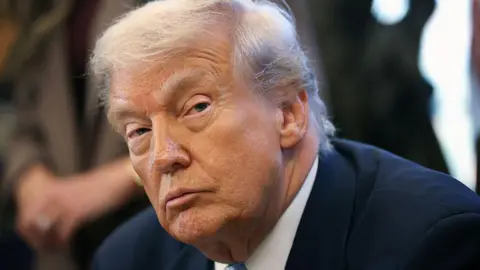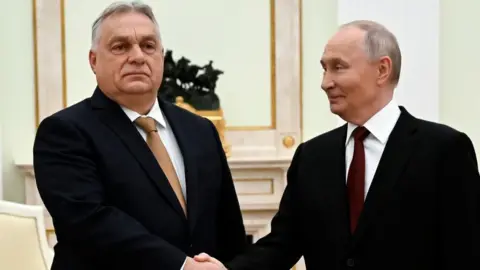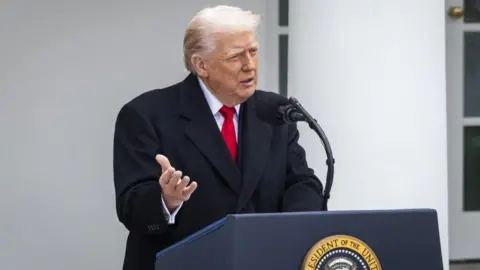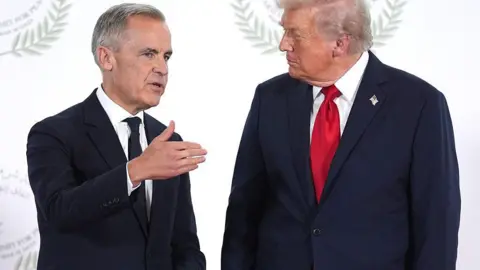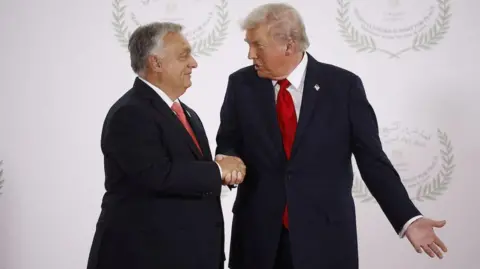
There is a war-opposing network in the world, with two focal points: one of power led by the US president and one of spirit found here with the Holy Father, Viktor Orban stated after a meeting at the Vatican. He emphasized drawing strength from both sources, potentially reflecting his relationship with US President Donald Trump, who has called him a 'great leader'. However, as the two prepare for a crucial meeting in Washington, Orban’s stance on Russian oil could complicate their alliance.
The dialogue is expected to center around Trump’s push for Hungary and Slovakia to swiftly move away from Russian oil imports, a move linked to efforts to pressure Russia amid its continued aggression in Ukraine. Orban's reaction to US sanctions on Russian oil giants has been mixed, with him suggesting that from a Hungarian perspective, Trump's measures might be excessive.
Orban’s significant reliance on Russian energy is viewed as both a political weapon and a re-election strategy, as he promises voters affordable Russian oil amid his government facing declining poll numbers. This reliance has also created tension with the US, particularly following the increased sanctions imposed just as Orban rallied his supporters in Budapest.
Despite this heavy dependence, the Czech Republic presents a contrasting narrative. Post-2022, it has transformed its energy sourcing, having completely eliminated Russian oil imports after heavy investment in alternative transportation and infrastructure. This case poses a challenge for Orban’s narrative that Hungary lacks feasible alternatives.
Orban’s upcoming meeting with Trump could press him to show some resolve against Russian oil imports. Yet, this could risk his credibility domestically, as he has long maintained that Hungary's stability hinges on access to Russian energy resources. As political maneuvers intensify, the situation reflects broader tensions not only in US-Hungary relations but also in how Central European nations are navigating their energy needs amid geopolitical challenges.