In brief
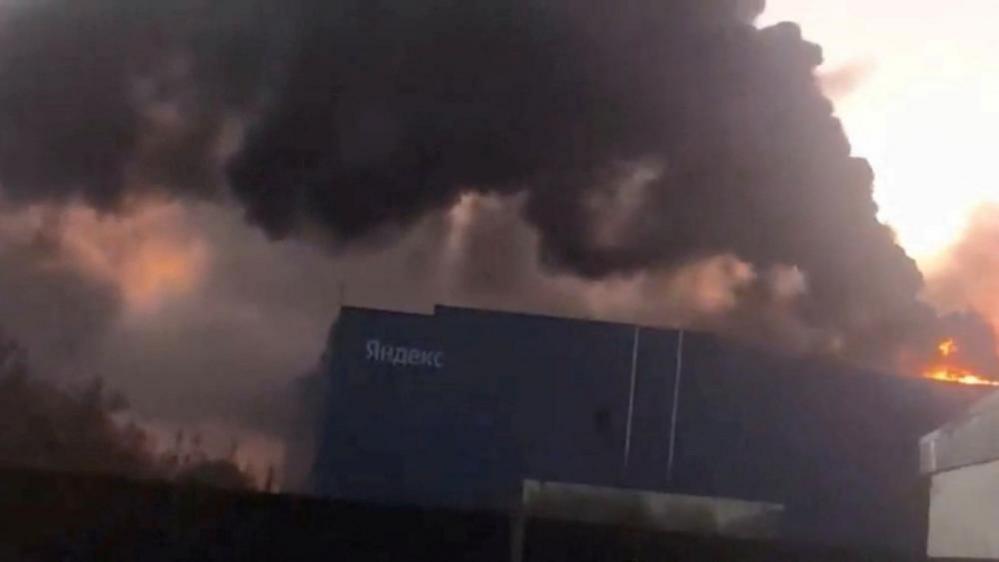
Ukrainian drones hit Yandex’s Sasovo and Kaluga data centres over the past two days, leaving the search giant scrambling to keep services running. The strikes have knocked out critical infrastructure, including AI supercomputers, and have forced Yandex to work around the clock for an uncertain recovery. The attacks are part of a broader tit‑for‑tat war over digital infrastructure, with Kyiv citing Russian strikes on its own data centres as just cause. Despite the damage, no Yandex staff were injured, but the disruption may strain the company’s resources amid a tough wartime economy.
By Tinshui Yeung
Russian tech giant Yandex has said it was struggling to maintain services after two of its five data centres were struck by Ukrainian drones in the past two days.
Dubbed “Russia’s Google,” the service runs the country’s most popular search engine and powers a food‑ordering and taxi app used by tens of millions.
President Volodymyr Zelensky said the attacks were retaliation for weeks of Russian strikes on Ukrainian data centres.
Both sides have stepped up infrastructure attacks as the conflict drags on. Kyiv says its strikes target Russian war‑machine revenues, and recent hits could force Moscow to redirect resources to Yandex.
Yandex confirmed that its Sasovo data centre in the Ryazan region suffered “serious damage” overnight into Thursday, with operations “completely suspended.” Another hub in Kaluga was also hit Friday morning, leaving part of the site offline.
The company said its data centres are “critical” for normal service operation and that it is “very difficult to predict” when they will be back online. Teams are working “day and night” to keep services running, though it is not a simple task.
Yandex noted that none of its employees were injured; however, the regional governor in Kaluga reported nine injuries from a drone attack on the city’s infrastructure.
The scope of service disruption remains unclear. Yandex informed the state news agency Tass that some AI chatbot functions were temporarily unavailable, and smart‑home devices may also be affected.
The Kaluga data centre, one of Russia’s largest, covers 130,000 sqm and consumes electricity equivalent to 220,000 UK households. The Sasovo centre houses two of three supercomputers used to develop Yandex’s AI model. It is unclear whether the supercomputers survived.
Ukraine’s defence ministry confirmed the attacks and warned they could force Russia to divert resources to repair damaged capacity. Zelensky said Kyiv’s response is “mirror‑like” to Russian strikes on Ukrainian data infrastructure.
A month earlier, a Russian drone struck a business centre in Kyiv, killing four people and damaging a data centre, leaving 100,000 households offline. Some Ukrainian firms have relocated data to overseas servers to mitigate the damage.
Moscow justifies the attacks by claiming the data centres support Ukrainian military intelligence, while Ukraine accuses Russia of deliberately targeting civilian infrastructure. Russia has intensified strikes on energy infrastructure ahead of winter, mirroring tactics used in previous years of the full‑scale invasion that began in 2022.