In brief
SpaceX's Starship has been grounded after its latest test flight resulted in an explosion over the Caribbean, prompting an FAA investigation. The rocket's upper stage disintegrated, leading to diversions of aircraft in the area. Elon Musk's ambitions for the rocket remain intact, despite challenges faced during this seventh test flight.
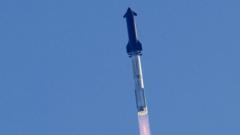
US aviation authorities have temporarily grounded SpaceX's Starship rocket after it exploded during its latest test flight, raising significant safety concerns. This incident resulted in the rocket's upper stage breaking up over the Caribbean shortly after launching from Texas on Thursday, which led to alterations in the flight paths of nearby airline flights to avoid potential debris.The U.S. Federal Aviation Administration (FAA) is collaborating with SpaceX and other relevant agencies to investigate reports of damage to property in the Turks and Caicos Islands. Fortunately, there have been no injuries reported related to the incident. The FAA has mandated SpaceX conduct a "mishap" investigation, the findings of which will dictate whether Starship returns to the sky. In response to the falling debris, the FAA initiated a "debris response area" that affected air traffic, forcing several aircraft to divert due to low fuel levels while awaiting clearance. Witnesses even reported seeing debris over the Turks and Caicos Islands shortly after the explosion.Elon Musk's Starship is known for being the largest and most powerful rocket ever constructed, with aspirations tied to Mars colonization. Thursday's uncrewed test was the seventh mission for the Starship, which incorporated a taller, upgraded version of the rocket. The enhancements aimed for a controlled splashdown in the Indian Ocean roughly an hour after launch.The Starship system lifted off at 5:38 PM EST and successfully separated from its Super Heavy booster within the expected timeframe. However, communications with the upper stage soon faded, and SpaceX confirmed that the vehicle had experienced a "rapid unscheduled disassembly."In response, Musk indicated via social media that preliminary evaluations suggested an oxygen/fuel leakage above the ship's engine firewall might be the culprit for the explosion. Despite this setback, Musk stated that indications so far do not require delaying the next launch, which is anticipated for the next month.The Starship system, comprised of the spacecraft and Super Heavy rocket, stands at an impressive 123 meters (403 feet) tall and is designed for full reusability. NASA plans to utilize a modified version of Starship for its upcoming Artemis missions aimed at lunar exploration, while Musk envisions future voyages to Mars with the spacecraft.This latest test coincided with a significant milestone for competitor Blue Origin, which successfully conducted its first flight of the New Glenn rocket system, intensifying the competitive race between Musk and Amazon founder Jeff Bezos in the space vehicle sector.