In brief
Between October 24–31, the National Network on Cuba organized a Global Week of Action, with marches in New York, Chicago, Boston, Miami, and Los Angeles. On October 28 the UN General Assembly adopted the resolution calling for an end to the blockade with 187 countries supporting and three opposing. Protests drew crowds ranging from 50 in Miami to larger gatherings in Chicago and L.A., underscoring domestic opposition to the U.S. siege.
On October 28, the United Nations General Assembly voted on a resolution calling for an end to the U.S. blockade on Cuba, with 187 countries in favor and three against, according to a Facebook post by the UN General Assembly. Eight days earlier, the National Network on Cuba had organized a Global Week of Action that saw demonstrations across major U.S. cities.
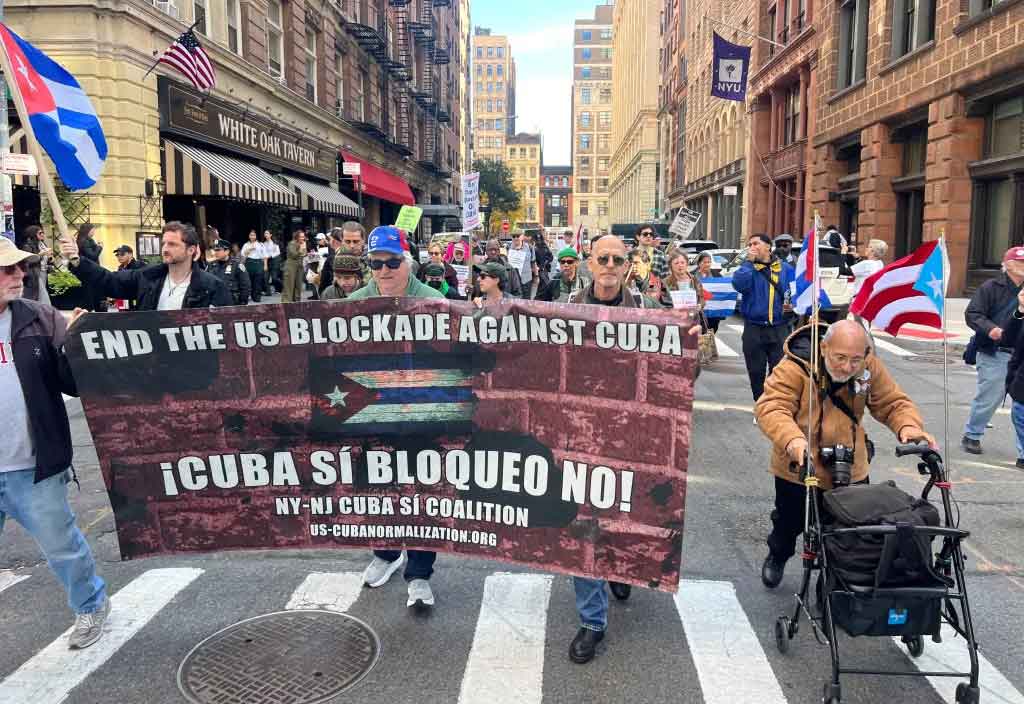
In New York City, a march on October 25 drew an estimated 1,000 participants. The Chicago Cultural Center hosted an interactive presentation on October 24, echoing calls to strike down the blockade. The First Baptist Church in Jamaica Plain, Massachusetts, hosted a protest on October 26, and on October 27, the Massachusetts Institute of Technology welcomed a demonstration that underscored the campus’s support for Cuban rights.
In Miami on October 28, activist Pete Seidman reported that around 50 people gathered at the “Torch of Friendship” monument in the downtown area, demanding an end to the siege. Radio Miami covered a demonstration at Federal Plaza in Chicago where participants condemned the U.S. government’s attempts to suffocate the Cuban people.
Los Angeles activists, led by Workers United—a branch of the Service Employees International Union—mobilized on October 28 to denounce what they called a unilateral siege that has endured for more than six and a half decades. Mark Friedman, an activist in L.A., commented on the turnout for the meeting, while Savannah Boyd of CodePink said, “I want you to understand something with absolute clarity: the U.S. fuel blockade is not an abstract political debate.”
These actions converged when the UN General Assembly passed the resolution, giving the mass protests a global platform and underscoring widespread domestic opposition to America's long‑standing blockade of Cuba.