Warning: This story contains references to sexual assault and suicide.
The death by euthanasia of a 25-year-old Spanish woman, Noelia Castillo, after a protracted legal battle with her father has triggered debate about the role of the state in caring for her and the lengthy process that delayed her wish to end her life.
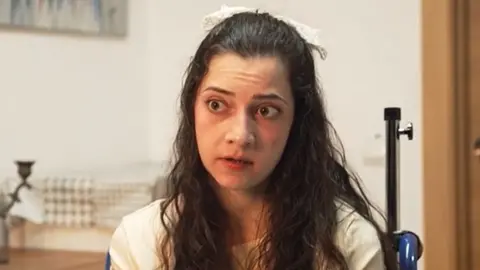
Left paraplegic due to injuries suffered during a 2022 suicide attempt, Castillo passed away in a Barcelona hospital. Although the Catalan regional government had granted her the right to assisted dying in 2024, the procedure was halted at the last moment following legal objections by her father, supported by the Christian Lawyers campaign group.
The case has drawn significant attention in Spain. Christian Lawyers fought to delay her death, emphasizing that her circumstances reflected failures within the healthcare system. Critics, including conservative opposition figures and commentators, argue that her story was indicative of systemic shortcomings, and that the state failed to provide the necessary support throughout her traumatic life.
After an 18-month struggle, the European Court of Human Rights ultimately ruled in her favor, allowing her to proceed with her decision. Castillo had endured substantial personal hardships, including childhood experiences in care homes and trauma from sexual assault. In a pre-death interview, she expressed a lack of family support for her decision and reiterated her desire to stop suffering.
Her mother attended the procedure despite disagreeing with her decision, while others, including friends and public figures, expressed deep concern and attempted to intervene, highlighting the complexity and emotional weight of her choice.
This case underlines the contentious debate surrounding euthanasia in Spain, one of the few European nations to officially sanction it. Following the 2021 law, requests for assisted dying must be supported by medical professionals and processed through rigorous channels to ensure the decision is made without external pressures.
According to recent governmental statistics, a total of 426 requests for assisted dying were granted in 2024. As public opinion evolves, Castillo's case continues to spark discussions about mental health, familial relationships, legal ethics, and the state’s role in personal health matters.