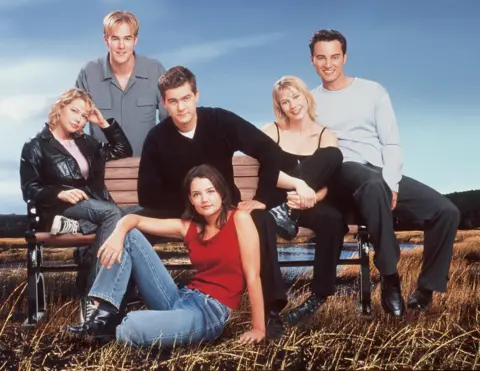
Dawson's Creek was my guilty pleasure in the late 90s. Even at a time when I was slightly older than the target audience, my friends and I would often find ourselves huddled under duvet covers on a Sunday morning, recovering from a night out with episodes of this cardiac drama on repeat.
The show, created by Kevin Williamson—who also brought us the Scream franchise—premiered in 1998 and chronicled the lives of teenage friends in the fictional town of Capeside, Massachusetts. At its center was Dawson Leery (James Van Der Beek), a sensitive young filmmaker navigating the tumultuous waters of adolescence.
As the character grew, Van Der Beek captured the complexities of teenage emotions. His portrayal was unique at the time—Dawson was not the stereotypical jock, but rather a character that broke the mold, embodying vulnerability and introspection that resonated with audiences.
The show garnered a solid fan base, averaging six million viewers in the U.S. alone, while being broadcast in approximately fifty countries. It diverged from typical teen dramas like Beverly Hills, 90210, by delving into more serious themes such as mental health, grief, and sexuality in an authentic and relatable way.
Critics have noted the groundbreaking nature of Dawson's Creek, particularly for its representation of LGBTQIA+ issues. The show featured one of the first teen gay kisses on primetime television, a pivotal moment that paved the way for greater representation in the media.
Despite the absence of typical adult role models—several parental figures are largely absent or flawed—the series encouraged teens to explore their emotions, leading to moments that some may have found cheesy but were grounded in genuine teen conflicts.
Ultimately, Dawson's Creek remains a landmark series due to its heartfelt storytelling and its ability to elevate discussions around youth issues into mainstream consciousness, a legacy that continues to influence the genre today.