Delivery Robots on the Move: Innovation Meets Public Pushback
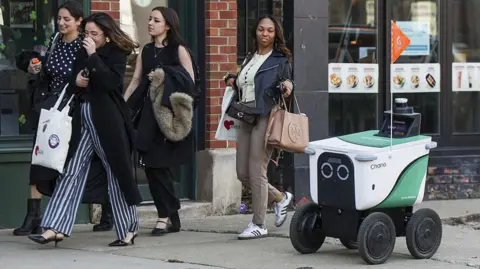
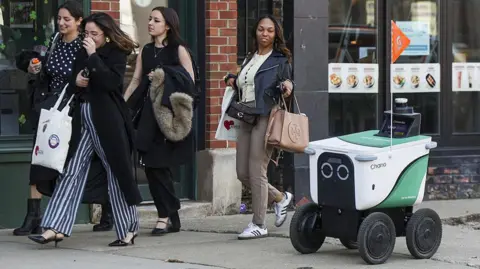
Across the United States, the United Kingdom, Japan and other advanced economies, fleets of autonomous delivery platforms glide on sidewalk and street lanes, turning the promise of quicker, greener local commerce into an everyday spectacle. Yet the novelty has also triggered unease among pedestrians, local authorities and labor advocates, who are weighing safety, rights and future employment.
Chicago offers a stark illustration. Residents first greeted a new delivery robot on their block as “neat” and “futuristic,” but the machine’s need to cross a curb organically diverted a family’s walk, prompting a public petition for a city‑wide pause. Authorities have already banned the robots in two neighborhoods, citing ongoing safety tests and a lack of clear regulatory rules.
Corporate players counter that the units use cameras, sensors and GPS to detect obstacles and navigate around pedestrians, even claiming to cut traffic and emissions. Representatives from Starship Technologies claim their robots are “friendly, polite and programmed to be careful.” Still, other cities such as San Francisco and Toronto have restricted use to low‑traffic zones or prohibited sidewalk access entirely.
Regulation is uneven worldwide. South Korea and Japan have embraced liberal policies, while many Canadian municipalities such as Glendale, California, are reviewing temporary bans. Authorities point to unannounced deployments and the lack of an agreed framework for permitting, insurance and accessibility standards.
Labor unions raise a layered concern. The Independent Workers Union of Great Britain warns that a permanent nationwide rollout could displace precarious delivery staff, especially in densely populated London. President Alex Marshall urges governments to enforce bans if public impact appears large.
The future looks crowded. A research report by Transforma Insight projects that by 2034 there may be 2.1 million autonomous delivery machines worldwide, suggesting rapid scaling will probably bring parallel policy evolution. Meanwhile, some analysts observe that public acceptance hinges on transparent safety records and clear cultural norms for sharing urban space.
In sum, as driverless delivery systems grow, cities face strategic decisions: whether to pause, regulate, or embrace. The outcome will shape both the rhythms of everyday life and the trajectory of automated commerce.