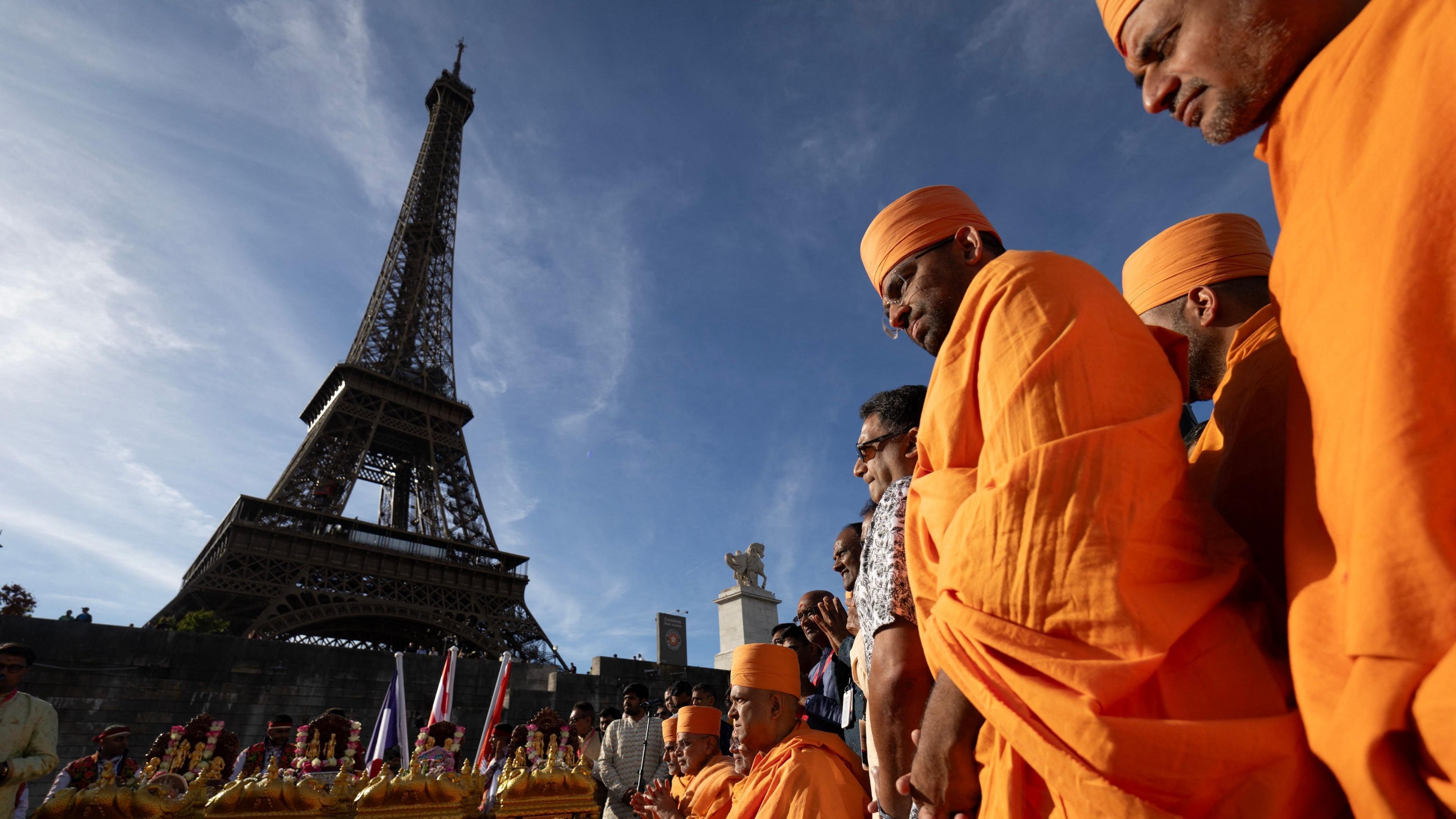
The chief executive of the company that runs Paris’s Eiffel Tower has agreed to resign after a public outcry over the removal of female staff during a visit by a large Hindu delegation. The incident, which led to a strike by employees, brought the question of gender discrimination into the spotlight for a landmark that is a national symbol and major tourist attraction.
SET, the operator of the tower, said an internal probe found operational errors that resulted in female workers being replaced by men. The change occurred after a request by the delegation from the Bochasanwasi Akshar Purushottam Swaminarayan Sanstha (BAPS) to limit interactions with women, a demand the management accepted in error. Workers claimed they were told to leave their posts and were barred from certain areas—an action that was deemed humiliating and unacceptable by the staff union.
Reactions followed quickly. Women’s rights groups called the move discriminatory and urged a thorough investigation. France’s National Assembly President Yaël Braun‑Pivet condemned the compulsory removal of employees, affirming that “no woman should be forced to step aside for a foreign visitor.” The Socialist mayor of Paris, Emmanuel Grelot, described the decision as “absurd, unjust and unacceptable” and ordered separate investigations.
BAPS issued an apology, saying it had profited from a public backlash for which it sincerely apologised. The group stresses that its dual‑gender entrance policy derives from 18th‑century Hindu teachings that it interprets as protecting women, but critics argue that such segregation is incompatible with contemporary anti‑discrimination law. The BAPS website frames its segregation policy as benevolent and respectful toward women.
The controversy sits at the intersection of cultural freedom and evolving gender‑equality legislation. France’s Convention on the Rights of Women and its domestic laws aim to protect women from unequal treatment in the workplace; organizations that serve the public are required to uphold these principles without accommodation that requires displacement of staff. The Diocese and civil authorities often negotiate religious practices with legal frameworks that encompass equal‑rights clauses, a process that can become strained when a tradition such as the BAPS segregation clashes with statutory non‑discrimination.
In response to the uproar, SET’s chair Ariel Weil announced plans for “training programmes promoting gender equality” and a leadership transition to ensure better governance. Meanwhile, the union remains open to further action if systemic flaws are not addressed.
The crane‑shaped tower’s collapse in this episode may prompt other public sites to re‑examine how cultural accommodations are achieved under the law. The incident also signals that corporate leaders will be scrutinised for how they manage the delicate balance between respecting religious traditions and protecting the rights of their employees.