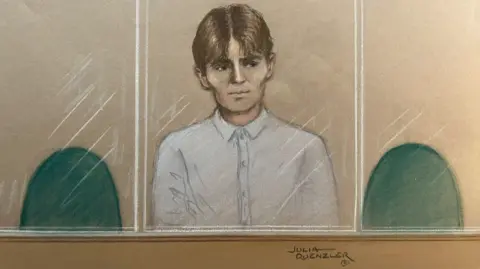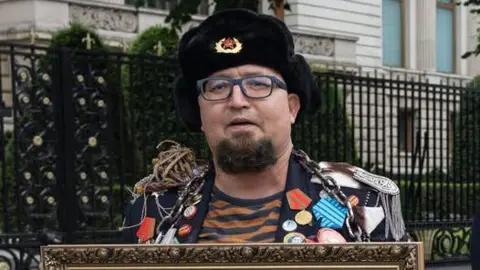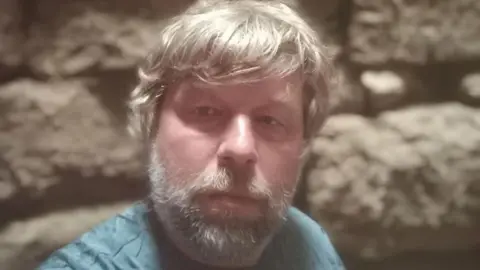
A Polish judge has ruled that Russian archaeologist Alexander Butyagin can be extradited to Ukraine, although his defence says he will appeal.
Butyagin is being held in a Warsaw prison for allegedly conducting illegal excavations and plundering artefacts from the ancient city of Myrmekion in Crimea - a peninsula annexed by Russia in 2014.
If Judge Dariusz Łubowski's ruling is upheld, a final decision on extradition will rest with Poland's justice minister.
Butyagin, arrested in Poland at Ukraine's request in December, denies all the allegations. If convicted, he faces up to five years in jail. Russia has demanded his immediate release, asserting that the case is politically motivated.
European courts have recently refused to extradite Russians to Ukraine due to concerns over possible violations of the European Convention on Human Rights since Russia's full-scale invasion of Ukraine in 2022.
Butyagin's lawyer, Adam Domański, argued that his client's life and wellbeing would be at risk if extradited to Ukraine.
The archaeologist's excavation work in Crimea has raised significant legal and ethical questions about cultural heritage given the ongoing military tensions and recent historical claims over the region. He might face charges for plundering artefacts, including 30 gold coins, resulting in damages estimated at more than $4.5 million (£3.4 million).
Before his arrest on December 4, Butyagin was active in Europe, presenting his work to Russian-speaking audiences. He knew of an arrest warrant issued by a Kyiv court in April 2025 but did not anticipate being detained in the European Union.
According to international law, Russia’s excavation activities in Crimea are considered illegal under the 2nd protocol to The Hague Convention, which protects cultural property in armed conflict. Ukraine and most European countries are parties to this protocol, while Russia is not.
Butyagin maintained that he continued excavating to protect the archaeological site from deterioration and vandalism, despite acknowledging that he lacked Kyiv’s authorisation. He refuted charges of intentionally damaging monuments.
Evelina Kravchenko, a senior researcher at Ukraine's Institute of Archaeology, condemned Russian archaeological activities in Ukraine as harmful and illegal.
The situation underscores the complex intersection of archaeology, national sovereignty, and cultural heritage amid the protracted conflict between Russia and Ukraine.