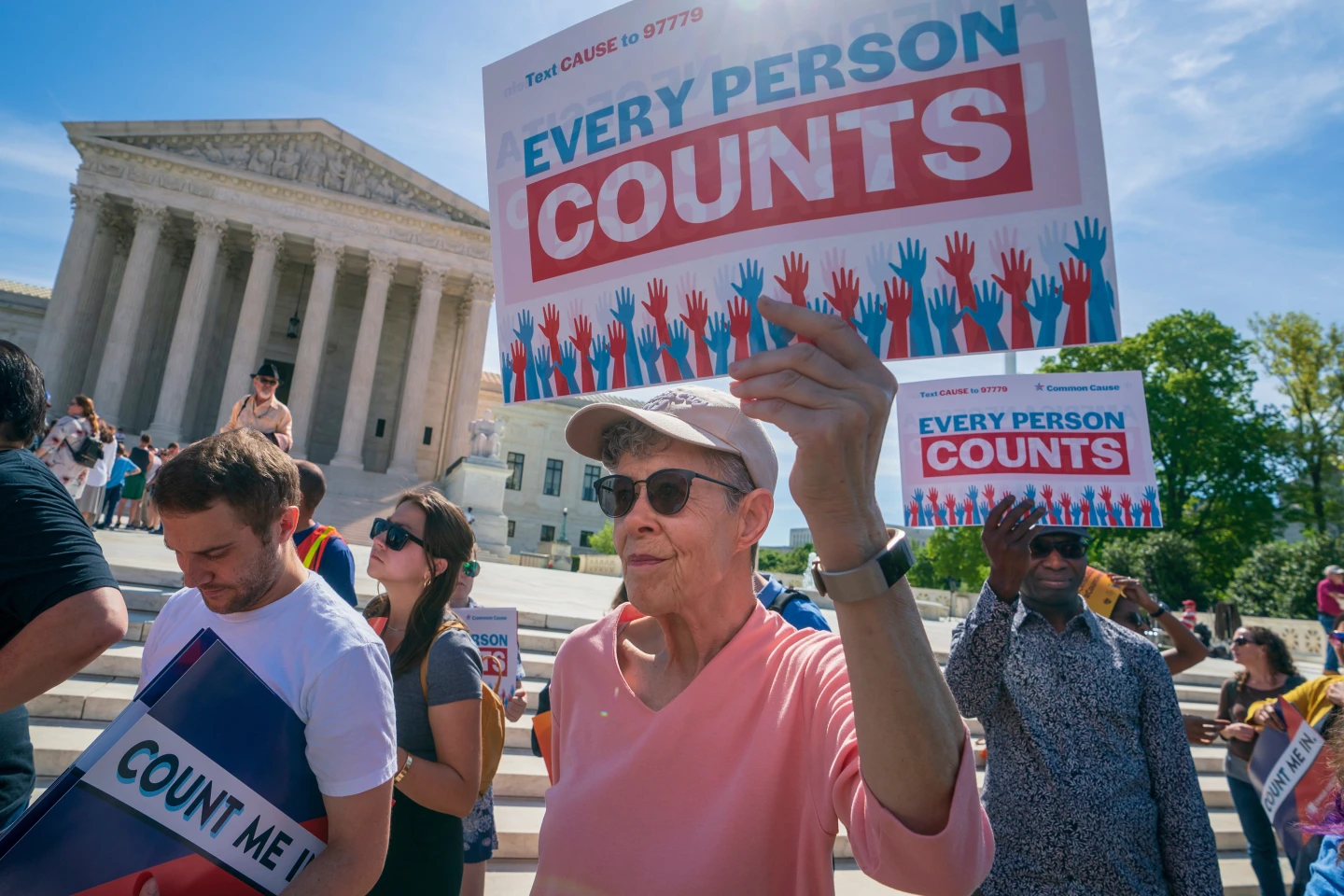
ORLANDO, Fla. (AP) — The next U.S. census is four years away, but two lawsuits playing out this year could affect how it will be done and who will be counted. Allies of President Donald Trump are behind federal lawsuits challenging various aspects of the once-a-decade count by the U.S. Census Bureau, which is used to determine congressional representation and how much federal aid flows to the states.
The challenges align with parts of Trump’s agenda even as the Republican administration must defend the agency in court. A Democratic law firm is representing efforts to intervene in both cases due to concerns over whether the U.S. Justice Department will defend the bureau vigorously. So far, there are no indications that government attorneys are not defending the agency adequately; they have even asked for one of the cases to be dismissed. As these challenges progress, the Census Bureau is continuing its planning for the 2030 count, with practice runs scheduled in six locations this year.
**The legal challenges**
America First Legal, co-founded by Stephen Miller, Trump’s deputy chief of staff, is leading a lawsuit filed in Florida challenging methods used to protect participants' privacy and ensure residents in group-living facilities are counted. The lawsuit aims to prevent these methods from being applied to the 2030 census and seeks to modify 2020 census figures. This case is about stopping illegal methods that undermine equal representation and ensuring the next census complies with the Constitution, stated Gene Hamilton, president of America First Legal.
Another suit was filed in Louisiana by four Republican state attorneys general and the Federation for American Immigration Reform, seeking to exclude undocumented residents from congressional redistricting counts. In both cases, outside groups represented by the Democratic-aligned Elias Law Group have sought intervention based on apprehension that the Justice Department might reach amicable settlements with the challengers.
In the Florida lawsuit, a judge permitted a retirees’ association and two university students to join the defense, while lawyers for the Justice Department requested the case be dismissed. In Louisiana, Justice Department lawyers indicated that groups like the League of Women Voters had not shown proof that their defense would be inadequate. No ruling has been made yet on these intervention requests.
**Aligning with Trump’s agenda**
The lawsuits, particularly the one in Louisiana, reflect core parts of Trump's agenda, despite the 2030 census being conducted under a different presidential administration. Trump tried to exclude individuals in the U.S. illegally from apportionment figures during his term and sought to gather citizenship data through administrative means. This approach is seen as beneficial to Republicans, and congressional efforts are underway to exclude noncitizens from the apportionment process. The implications can be significant, particularly for states like California, Texas, Florida, and New York, which harbor larger undocumented populations.
**Defending the Census Bureau**
Filed during the Biden administration, the lawsuits put the Census Bureau in a complex position. Despite concerns about potential settlements, current legal records show no action from government attorneys that would suggest undermining the Bureau's defense. As preparations for the 2030 census continue, Justice Department representatives have emphasized that lifting the stay on the Louisiana case would disrupt these crucial planning efforts. With federal resources at stake and implications for representation, the outcome of these lawsuits will likely have lasting effects on the future of the U.S. Census.
The challenges align with parts of Trump’s agenda even as the Republican administration must defend the agency in court. A Democratic law firm is representing efforts to intervene in both cases due to concerns over whether the U.S. Justice Department will defend the bureau vigorously. So far, there are no indications that government attorneys are not defending the agency adequately; they have even asked for one of the cases to be dismissed. As these challenges progress, the Census Bureau is continuing its planning for the 2030 count, with practice runs scheduled in six locations this year.
**The legal challenges**
America First Legal, co-founded by Stephen Miller, Trump’s deputy chief of staff, is leading a lawsuit filed in Florida challenging methods used to protect participants' privacy and ensure residents in group-living facilities are counted. The lawsuit aims to prevent these methods from being applied to the 2030 census and seeks to modify 2020 census figures. This case is about stopping illegal methods that undermine equal representation and ensuring the next census complies with the Constitution, stated Gene Hamilton, president of America First Legal.
Another suit was filed in Louisiana by four Republican state attorneys general and the Federation for American Immigration Reform, seeking to exclude undocumented residents from congressional redistricting counts. In both cases, outside groups represented by the Democratic-aligned Elias Law Group have sought intervention based on apprehension that the Justice Department might reach amicable settlements with the challengers.
In the Florida lawsuit, a judge permitted a retirees’ association and two university students to join the defense, while lawyers for the Justice Department requested the case be dismissed. In Louisiana, Justice Department lawyers indicated that groups like the League of Women Voters had not shown proof that their defense would be inadequate. No ruling has been made yet on these intervention requests.
**Aligning with Trump’s agenda**
The lawsuits, particularly the one in Louisiana, reflect core parts of Trump's agenda, despite the 2030 census being conducted under a different presidential administration. Trump tried to exclude individuals in the U.S. illegally from apportionment figures during his term and sought to gather citizenship data through administrative means. This approach is seen as beneficial to Republicans, and congressional efforts are underway to exclude noncitizens from the apportionment process. The implications can be significant, particularly for states like California, Texas, Florida, and New York, which harbor larger undocumented populations.
**Defending the Census Bureau**
Filed during the Biden administration, the lawsuits put the Census Bureau in a complex position. Despite concerns about potential settlements, current legal records show no action from government attorneys that would suggest undermining the Bureau's defense. As preparations for the 2030 census continue, Justice Department representatives have emphasized that lifting the stay on the Louisiana case would disrupt these crucial planning efforts. With federal resources at stake and implications for representation, the outcome of these lawsuits will likely have lasting effects on the future of the U.S. Census.