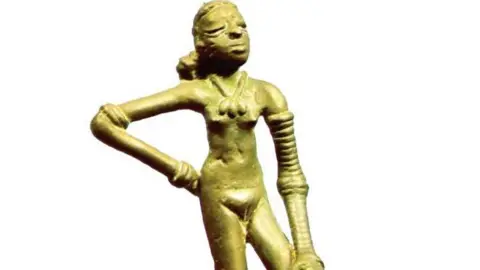
The media on Wednesday unveiled that a newly released grade‑nine NCERT textbook had a modified image of the 2600‑BCE bronze figurine known as the ‘Dancing Girl’. The picture had heavy shading over the torso, making the naturally nude bronze hide its anatomical detail. A wave of criticism from historians, educators and students erupted on social platforms and in the press.
Historically, the figure—discovered in 1931 at the archaeological site of Mohenjo‑daro—has been a staple in Indian school textbooks for decades. It portrays a young woman with her hand on her hip, holding a bronze lotus in her other hand. The sculpture is now housed in the National Museum in Delhi and is considered a key example of Indus Valley artistry.
Responding to the backlash, the NCERT said that the digital version of the book would be updated with the original photo and that any forthcoming print editions would carry the untouched image. In a statement to ANI, NCERT director Dinesh Saklani confirmed that the “modified image would be withdrawn” and replaced after “consultations with experts.”
The school board has not yet clarified why the shading was introduced. Media speculation suggests it was done to avoid the depiction of nudity, a sensitive issue for a school textbook, yet no official explanation has been released.
One editor of the Indian Express warned that censorship of the artefact would deny students the opportunity to engage with a historical object “as it is,” arguing that education should trust the agency of young people, women and scholars.
NCERT’s new text is part of a broader Arts Education Series launched under the National Education Policy, aiming to integrate visual, performing and literary arts into mainstream schooling. The ‘Dancing Girl’ remains a symbol of both cultural heritage and the modern debate over how historical artefacts are represented in educational materials.