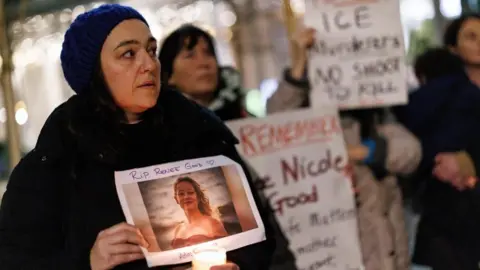
Investigating the Fatal ICE Shooting: A Complex Case in Minneapolis
The fatal shooting of a woman by a federal agent in Minneapolis has ignited nationwide protests and raised significant questions regarding the justification of the use of deadly force by law enforcement. The circumstances of the incident, which involved ICE agent Jonathan Ross shooting Renee Good while she was behind the wheel of her car, have unveiled sharply contrasting narratives from federal and local authorities.
Several videos from the scene depict the moments leading up to the shooting, showing federal agents approaching Good's vehicle and attempting to order her out. The situation escalated when the car began to move, leading Ross to fire at the vehicle. The federal government, including President Donald Trump and Homeland Security officials, have portrayed Good as a 'domestic terrorist' attempting to run over the agent. In contrast, local state officials argue that Good, a mother of three, was merely trying to leave the area.
This divergence in accounts complicates the investigation as officials must reconcile footage and testimonies against the Department of Homeland Security’s (DHS) policy on the use of deadly force. Experts suggest that the key factor will be whether the officer genuinely perceived a threat to his life. Former law enforcement officials indicate that previous experiences, such as Ross being injured in another incident, might affect how investigators assess his actions.
The convoluted nature of the shooting's justification is compounded by political pressures. With senior administration officials publicly declaring the shooting justified before a complete investigation, questions arise about the impartiality of the review process. Analysts are concerned that the political climate surrounding this incident may influence the investigators tasked with determining the facts.
Data from multiple video angles further complicate the narrative—while some suggest Good posed no immediate threat by turning her vehicle away from Ross, others insist the video implicates intentions of harm. As federal and local officials remain at odds over the investigation's control, there are calls for transparency and accountability, emphasizing that a comprehensive analysis of the evidence is crucial to prevent politicization of the facts.
In the lead-up to the final determination, experts urge against jumping to conclusions based on initial interpretations—an approach aimed at fostering a fair and objective review for the sake of public trust in law enforcement practices.