Iran's Explosive Media: AI-Driven Propaganda in a Lego Aesthetic
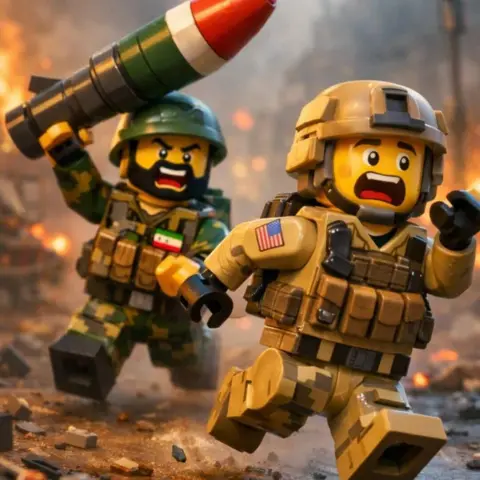
At first glance, videos emerging from Explosive Media, an Iranian content creator, seem reminiscent of charming Lego animation. However, a closer inspection reveals a different narrative entirely. These fast-paced AI-generated clips, which depict scenes of war, dying children, and political figures like former US President Trump, function as pro-Iran propaganda amidst the ongoing conflict with the United States.
In an exclusive interview for a BBC podcast, the individual behind these clips, known only as Mr. Explosive, initially disclaims any governmental ties but later admits his organization counts the Iranian regime as a key customer. He frames the videos as essential tools for communicating Iran’s perspective against what they perceive as a global oppressor—primarily the US.
These clips have become viral, despite their garish depictions and overt messages. They highlight significant events and sentiments from the perspective of Iran, showcasing narratives designed to resonate with Western audiences—using a familiar visual language that is both accessible and provocative.
One recent video illustrates Donald Trump overwhelmed by sensational claims regarding the Epstein files, while another evokes the Black Lives Matter movement by depicting George Floyd in a globally recognized context of oppression. Dr. Emma Briant, a propaganda expert, labels this content as beyond mere 'slopaganda', describing it as 'highly sophisticated' propaganda that has garnered hundreds of millions of views during the conflict.
The style and immediacy of these videos cater to the demands of social media; they are quick to produce and tailor to unfolding events in real-time. Explosive Media claims to operate efficiently, utilizing fewer than ten creators who employ AI technologies and graphic styles to create engaging and relatable content.
This innovative approach is deemed to cut out traditional media channels, allowing authoritarian regimes like Iran to communicate directly with Western audiences without intermediaries. Observers characterize this shift as 'defensive memetic warfare' aimed at combating US narratives with carefully crafted counter-narratives.
Some platforms have attempted to ban these videos, but new accounts continually emerge to share this content. It reflects an agile form of internet diplomacy that experts agree is likely here to stay—challenging the conventional understanding of propaganda and its power in shaping perceptions.