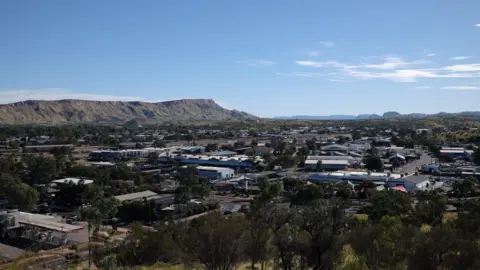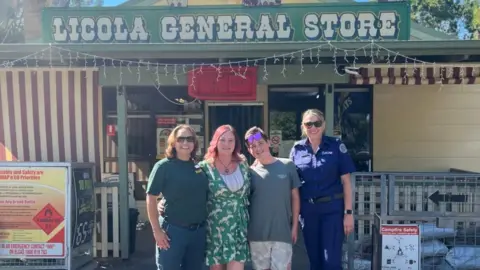
Tucked away in the rugged Victorian bushland lies the tiny outpost of Licola, population: five.
Consisting of a couple of weatherboard buildings, a general store, a caravan park and a petrol station grouped around a modest main street, Licola is one of Australia's smallest towns.
And if you have a spare couple of million dollars, you can buy it. The entire village - a three-hour drive from the city of Melbourne - is now up for grabs, much to the shock and ire of tight-knit locals.
Privately owned by a local community club, Licola has long been a guaranteed pit stop for fuel, food and rest for travellers on their way to the Alpine National Park. It also has a 50-year legacy of hosting outreach programmes for young people.
But the local branch of the Lions Club says it can't afford to run the town anymore, and late last year quietly listed it for sale online.
The sale has raised alarm bells for Licola's few passionate residents, locals in surrounding areas and even other Lions Clubs state members, who say they weren't fairly consulted and now hold grave fears for the future of the town.
'A home away from home'
Nestled beside the banks of the mighty Macalister River in Victoria's high country, Licola was originally a timber mill, built in the 1950s with a few buildings for those working there. After it closed in 1968, the Lions Club acquired the whole site and turned it into a camp where disadvantaged young people and children, and groups with special needs, could stay during school holidays.
Today, Leanne O'Donnell - who runs the General Store - and her family are the only full-time residents of the town. She lives there with one of her children, along with her best friend and her two kids.
It's just an amazing place, O'Donnell tells the BBC. When I first moved here, people would come into my store and say, 'You're not going to make a million dollars in Licola.' And I'd say, 'Who said I'm here to make a million dollars?' O'Donnell purchased the business in 2022 but doesn't own the buildings, signing a lease she says she was led to believe would be extended to a 15-year term.
From day one, O'Donnell wanted Licola to be a home away from home for people. Nearly every person who visits, works or passes through Licola has O'Donnell's number – even truck drivers and the Country Fire Authority.
But O'Donnell now faces eviction. I absolutely love this town... if it gets into the hands of a developer and turns into something that it's not, it [will] just break my heart, she says.
The sale has been met with intense backlash online from locals in the surrounding areas. Many are upset over O'Donnell's treatment and are concerned the beloved town could die out or be commercialized. An online petition to save the store, renew the lease and let Leanne stay, has more than 8,000 signatures.
As outrage grew, the Lions Village Licola board said its staff were receiving threats and it was considering withdrawing them from the town.
The board has stated that the decision to sell the town was prompted by a review into its operations. They argued that maintaining the site had become unsustainable due to rising costs and declining attendance at camps.
While the future remains uncertain for Licola, it has sparked a fierce community spirit and a fight to retain its character and history.