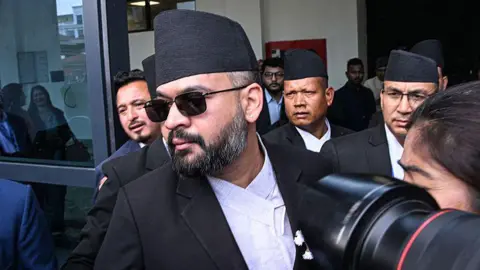
Nepal's New Prime Minister: Balendra Shah, From Rapper to Politician
Rapper-turned-politician Balendra Shah has been sworn in as Nepal's prime minister after a landslide victory in the country's first election since last year's youth-led protests.
The 35-year-old's rise marks an important shift in Nepali politics. His promise of change resonated with an electorate that was angry at corruption, nepotism and elite rule.
Before taking office on Friday, Shah, popularly known as Balen, released a song filled with optimism about Nepal's future. Undivided Nepali, this time history is being made, he rapped in a track that garnered more than two million views within hours of its release. The song harks back to his roots in the underground rap scene, where he used music to call out corruption and other social problems in Nepal.
After just three years as mayor of the capital Kathmandu, Shah teamed up with the Rastriya Swatantra Party (RSP) as its prime-ministerial candidate, scoring a decisive victory in general elections this month. His supporters see him as a symbol of change and a break from the failings of Nepal's old guard. But some question whether the four-year-old RSP is capable of making good on its bold pledges.
The Rebellious Rapper
Shah was born in 1990 in Naradevi, Kathmandu, to a traditional family. Winning popularity through rap battles, he criticized societal issues and corruption through his lyrics. One of his popular songs, Balidan, explores the inequalities faced by ordinary Nepalis.
Shah's political journey accelerated after he gained a substantial following among the youth, particularly during the protests last September against government policies, where over 70 lives were lost. His music became anthems for these protests, imbuing a sense of hope and the desire for change.
The Rise to Power
In September, Shah's platform resonated with disillusioned youth, leading to a victorious campaign for RSP. His strategy involved engaging voters through social media rather than traditional media approaches, allowing him to present a sweeping anti-corruption agenda.
However, his tenure as mayor was marked by some controversies, particularly regarding his approach to street vendors and urban policing. Critics have pointed to these actions as indicative of a heavy-handedness often seen in officials eager to demonstrate immediate results.
Controversy and Challenges Ahead
As he assumes office, Shah must navigate significant public expectations for reforms, particularly in regard to tackling corruption, unemployment, and economic stagnation in Nepal. He faces the challenge of balancing public pressure with the realities of governance, especially given his inexperience at the national level.
While his supporters view him as a progressive force, the effectiveness of his administration will ultimately depend on his ability to fulfill his promises while addressing past criticisms, including his contentious tenure as mayor.