Norway's Crown Princess Mette-Marit has given a profound apology to Norwegians for her friendship with late sex offender Jeffrey Epstein, after it emerged they had exchanged messages for three years.
I also apologise for the situation in which I have placed the Royal House, especially the King and Queen, she said in a palace statement after days of mounting pressure to address the issue.
Harald V and Queen Sonja, who are both 88, have not commented on the revelations.
The King met Prime Minister Jonas Gahr Støre on Friday, alongside Crown Prince Haakon, who told reporters later that his wife wanted to speak: But right now she can't, and I also tell her she is not allowed to.
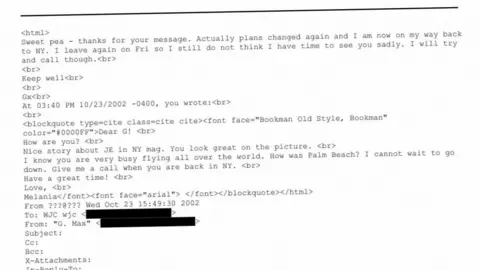
Hundreds of emails from 2011-14 involving Epstein and the crown princess came to light in the cache of files published by the US justice department a week ago. Some exchanges apparently involve plans to meet in person, revealing she spent four days at Epstein's Palm Beach house in Florida while he was not there.
The warm nature of the correspondence has shocked Norwegians, particularly as she appeared to have been aware of his past legal issues: Googled u after last email, she wrote in October 2011. Agree didn't look too good.
Although an initial statement released last Saturday regretted her actions and admitted poor judgement, the palace was pressed to provide more details about her relationship with Epstein.
In a statement, the palace noted the crown princess was deeply saddened that she had not realized sooner what kind of person he was. She expressed that it was important for her to say she was sorry to those she has disappointed, emphasizing that some parts of their correspondence did not represent the person she wants to be.
Mette-Marit, who suffers from pulmonary fibrosis and is preparing for a lung transplant, faces another layer of personal challenges as her son Marius, whom she had from a previous relationship, is involved in a high-profile legal battle.
The situation poses an unwelcome glare on Norway's royal family, complicating their public duties amidst a backdrop of legal and health issues, showing the intricacies of personal decisions in the realm of public health.