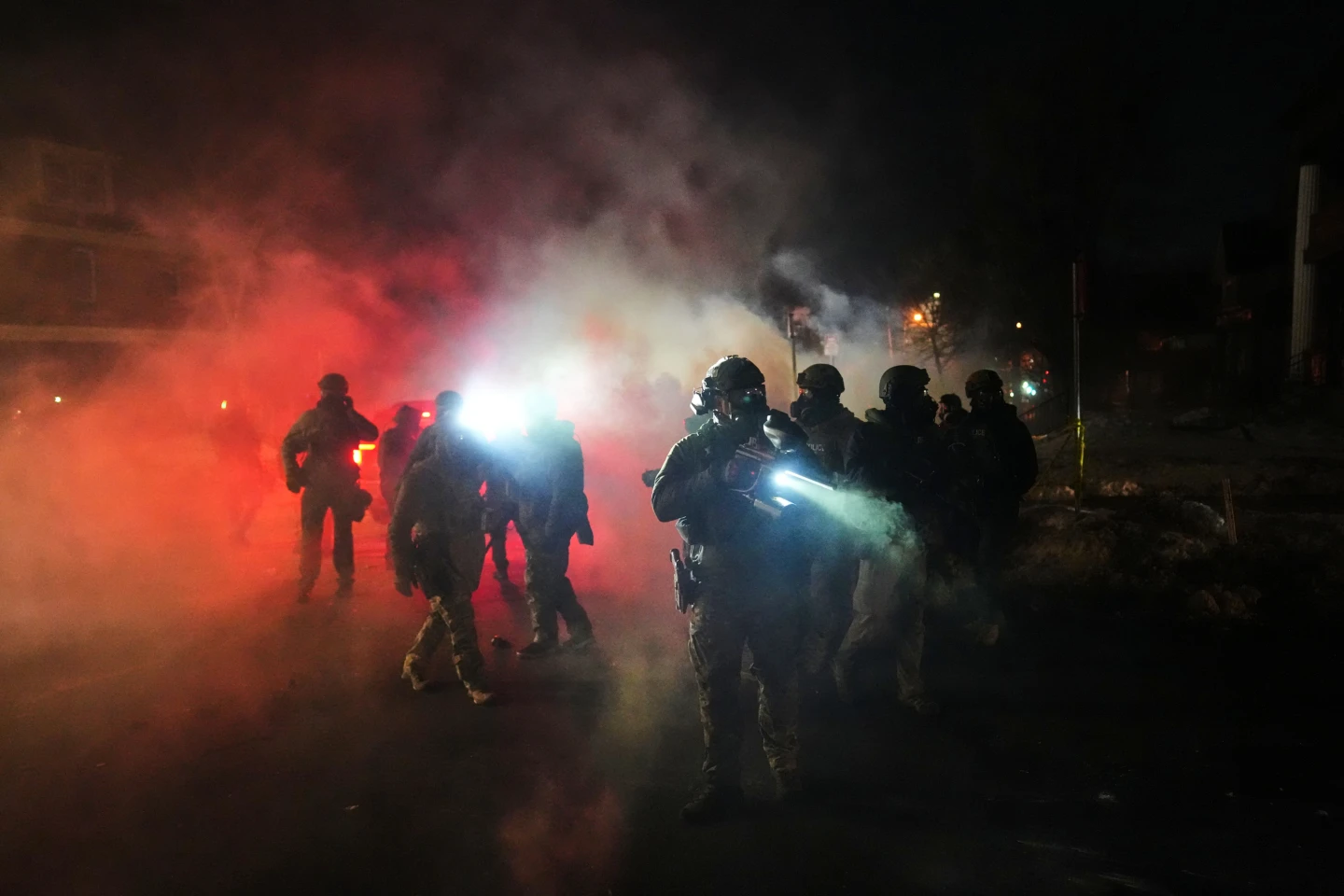
WASHINGTON (AP) — The names of recent immigrant enforcement operations in the U.S., such as 'Operation Dirtbag' in Florida and 'Catahoula Crunch' in Louisiana, have elicited vastly different reactions, largely divided by political affiliation. While many Democrats see these names as a reflection of a dehumanizing attitude towards immigrants, Republicans argue they signify a serious approach to immigration law enforcement.
California Congressman Jimmy Gomez criticized the titles, stating they imply that immigrants are viewed as 'sub-human.' His remarks highlight concerns over the tone of the administration's communications regarding immigration enforcement.
Conversely, Republican lawmakers, like Congressman Brandon Gill, believe the playful names convey a strong stance against illegal immigration and underline the administration's commitment to border security.
Mixed Historical Perspectives
Historically, military operations have been assigned benign titles to avoid raising suspicion; however, current practices differ. Experts like Michael O’Hanlon from the Brookings Institution note that contemporary operations often adopt names that project bold messages reflecting the political motives behind such actions.
The use of catchy titles like 'Operation Catch of the Day' has resulted in backlash from immigrant advocates and Democratic politicians, with many labeling the names as 'racist and degrading.' Maine Congresswoman Chellie Pingree denounced the naming as an offensive joke, emphasizing its impact on local immigrant communities.
On the other hand, Republican party members have dismissed the criticisms regarding operation names, emphasizing that the focus should remain on the broader immigration issues facing states like Maine.
Cultural References and Public Reaction
Some operation names have also drawn from popular culture, such as a recent enforcement sweep titled after E.B. White's 'Charlotte’s Web.' Critics argue that these uses trivialize the serious nature of immigration enforcement actions. Advocates like Hector Diaz question whether the administration's approach is more about media appeal than serious policy enforcement.
Responses to the operation names reflect broader societal divisions over immigration policy in the U.S., highlighting a persistent tension between how immigrants are perceived across political lines.
In summary, the debate over immigration operation names reveals deep-seated issues regarding race, policy, and the portrayal of immigrant communities, leaving many to ponder the fine line between serious law enforcement and offensive branding.