US Shifts Strategy in West Africa: Engagement with Juntas Turning to Russia
The US has declared a stark policy shift towards three West African countries which are battling Islamist insurgents and whose military governments have broken defence ties with France and turned towards Russia.
The state department announced that Nick Checker, head of its Bureau of African Affairs, would visit Mali's capital Bamako to convey the United States' 'respect for Mali's sovereignty' and chart a 'new course' in relations, moving 'past policy missteps'.
It adds that the US also looks forward to co-operating with Mali's allies, neighbouring Burkina Faso and Niger, 'on shared security and economic interests'.
Absent from the agenda is the longstanding American concern for democracy and human rights. The Biden administration had halted military co-operation after coups deposed the elected civilian presidents of all three countries between 2020 and 2023, with Niger's Mohamed Bazoum still locked up in his own residence.
This shift has become evident over the past year, particularly escalating after Donald Trump returned to the White House, with indications of a narrower focus on security and mineral resources, sidelining development and governance concerns.
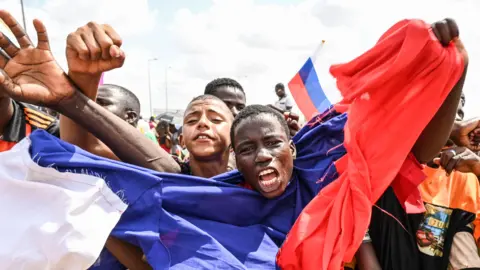
The announcement of Checker's visit indicates an explicit respect for Mali's sovereignty, resonating with military leaders who have built their appeal on anti-colonial narratives and personal popularity, particularly among youth.
Burkina Faso's military leader, Capt Ibrahim Traoré, is presenting himself as a champion against 'imperialism' and through social media has gained notable support across Africa.
The Trump administration has expressed a lack of concern for the rejection of democratic models by these regimes, focusing instead on addressing security threats from jihadist groups that have begun to proliferate across the region.
This has led to a focus on reducing the negative influence of Russia, as the US does not want Moscow to hold an exclusive role in defense partnership with these nations.
Currently, Russia has deployed approximately 1,000 security contractors in Mali and small numbers in Burkina Faso and Niger, despite numerous allegations of human rights abuses attributed to Russian forces.
High-tech military solutions alone are unlikely to restore stability unless underlying social and economic issues are addressed, a lesson highlighted by the failure of past international military deployments in the region.