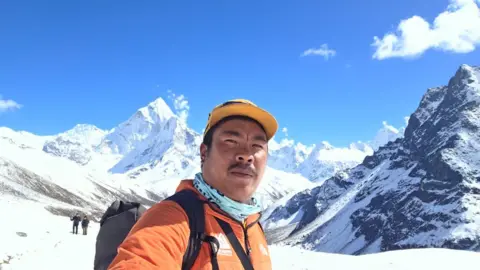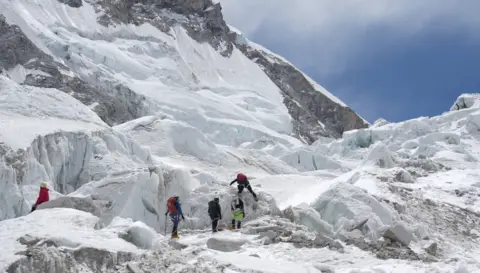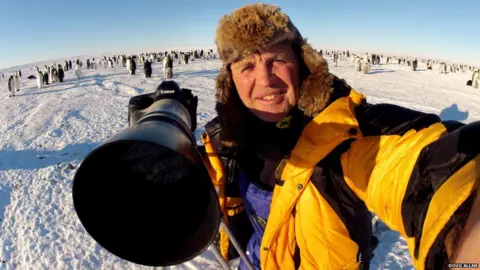
The acclaimed wildlife cameraman and photographer Doug Allan has died while trekking in Nepal.
Allan, 74, was principal cameraman on a number of BBC programmes including The Blue Planet, Blue Planet II, Planet Earth, and Frozen Planet, and spent much of his career working alongside Sir David Attenborough.
He won eight Emmy Awards for his work and was made an OBE for services to broadcast media and environmental awareness in 2024.
Allan's management company said he had died immersed in nature and surrounded by friends.
In a statement, Jo Sarsby Management described him as a true pioneer of wildlife filmmaking who had captured some of the most breathtaking and intimate images of the natural world. They added: Doug leaves behind a visual legacy that few could ever match. His work brought audiences closer to the wonders of our planet, inspiring awe, understanding, and deep respect for the planet.
When we think of Doug, we will always remember his unforgettable kindness and his extraordinary talent. He was a true gentleman and he will be profoundly missed. Our thoughts are with his family, friends, colleagues across the wildlife filmmaking industry, and the many people around the world who admired his work.
Born in 1951, in Dunfermline, Fife, Allan became interested in snorkelling and diving after watching Jacques Cousteau's film, The Silent World. After graduating with a degree in marine biology from the University of Stirling, he took on a number of diving jobs. His big break came when he was taken on as a research diver with the British Antarctic Survey, stationed at Signy Island in the South Orkney Islands. He was later awarded the Polar Medal for his work.
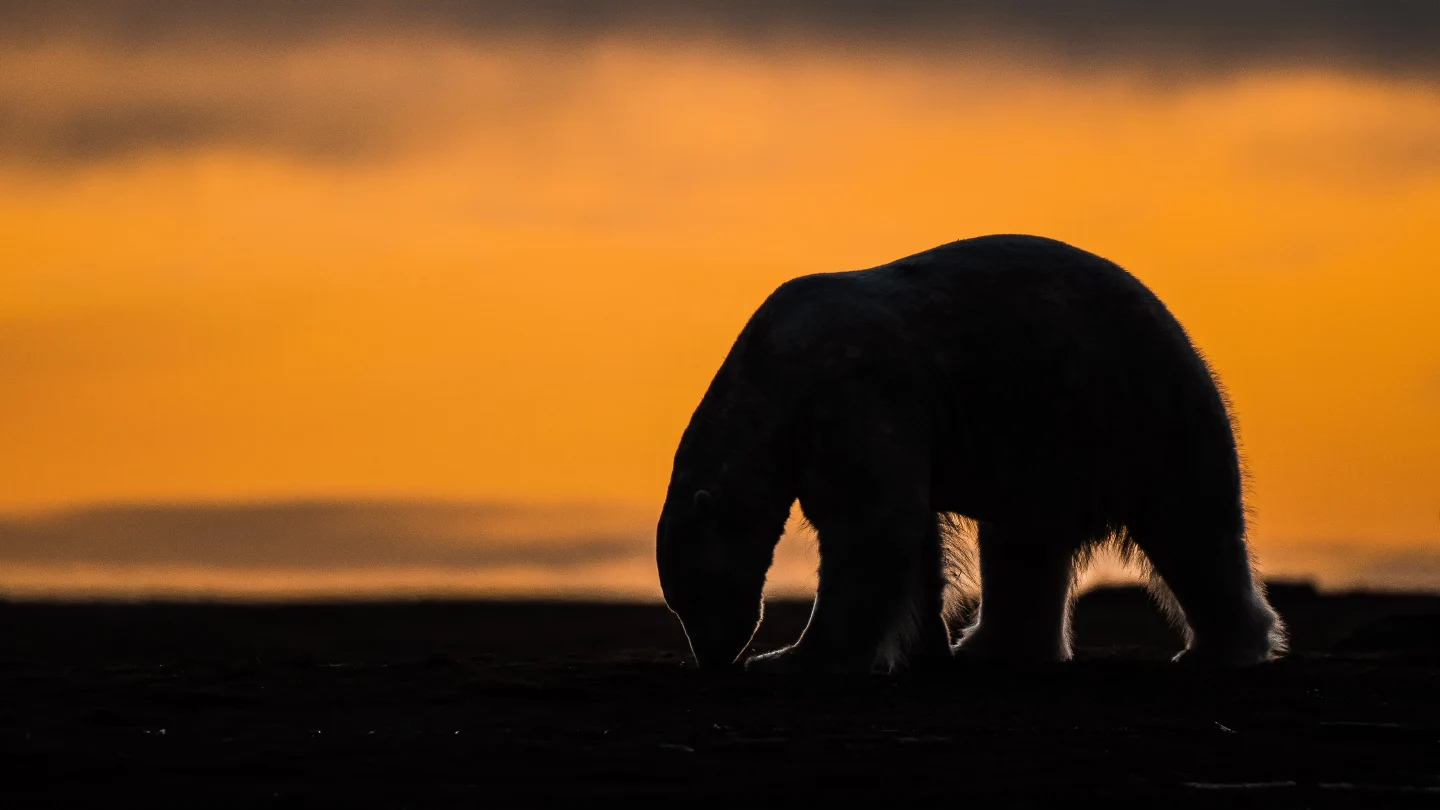
In 1981, a chance meeting with Attenborough led to Allan working on the documentary series Living Planet, part of which was filmed in the Antarctic. He began specialising in filming in some of the planet's most extreme environments and in 2017, he mentioned that he had spent about 620 days searching for polar bears.
Allan won eight Emmy Awards, five Bafta's and was made an honorary fellow of the Royal Photographic Society throughout his career, highlighting his lasting impact on wildlife filmmaking.