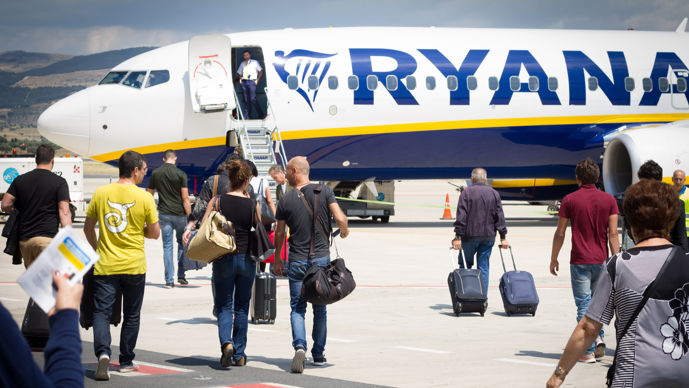
A Ryanair flight from Greece to Germany suffered an engine fan‑blade failure that tore a cabin window, leaving a passenger partially trapped and seriously injured.
On 10 July, the NTSB preliminary report disclosed that the right engine’s fan blade broke shortly after takeoff. Debris from the fault fragmented the plane’s cabin window, sucking out Serbian passenger Ljubisa Karović’s head and right shoulder. He was reported as seriously injured and in shock, while his wife, Svetlana Grković, and two other passengers maintained his legs for several minutes.
In response, the aircraft’s crew elected to return to Thessaloniki International Airport (SKG), where they made an uneventful landing. The flight crew had initially received a high‑vibration alert during climb, reduced engine power, conducted checks, and continued on autopilot until the vibrations intensified and a loud bang prompted them to declare an emergency.
Crew witnesses noted increased vibration, a moderate amount of smoke, and the deployment of oxygen masks. Flight attendants described passengers calling for help as one man became partially lodged in the damaged window, which was entirely missing after the impact.
The NTSB emphasized that the engine had passed ultrasonic inspections in May without fault findings. The agency is now investigating the reliability of the fan blade and potential foreign‑object damage, a theory suggested by Ryanair’s chief Michael O’Leary earlier.
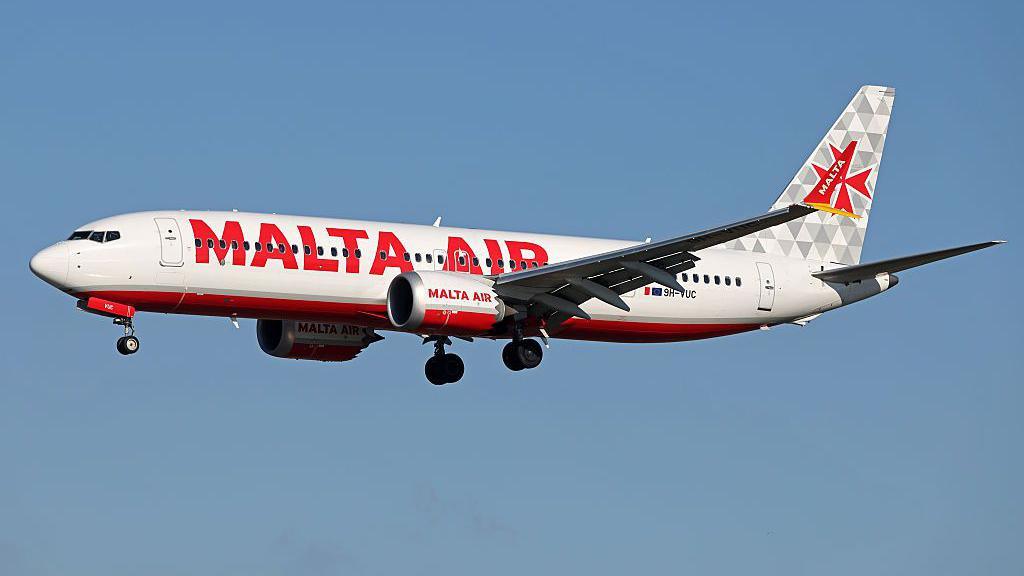
Ryanair’s subsidiary Malta Air operated the aircraft, and Greek regulators have delegated the investigation entirely to the NTSB. The incident has prompted broader discussions about engine design, maintenance procedures, and the adequacy of safety provisions for passengers in the event of mid‑air structural failures.
For further context, readers may consult related pieces on Ryanair safety revelations and passenger experiences during aircraft emergencies.