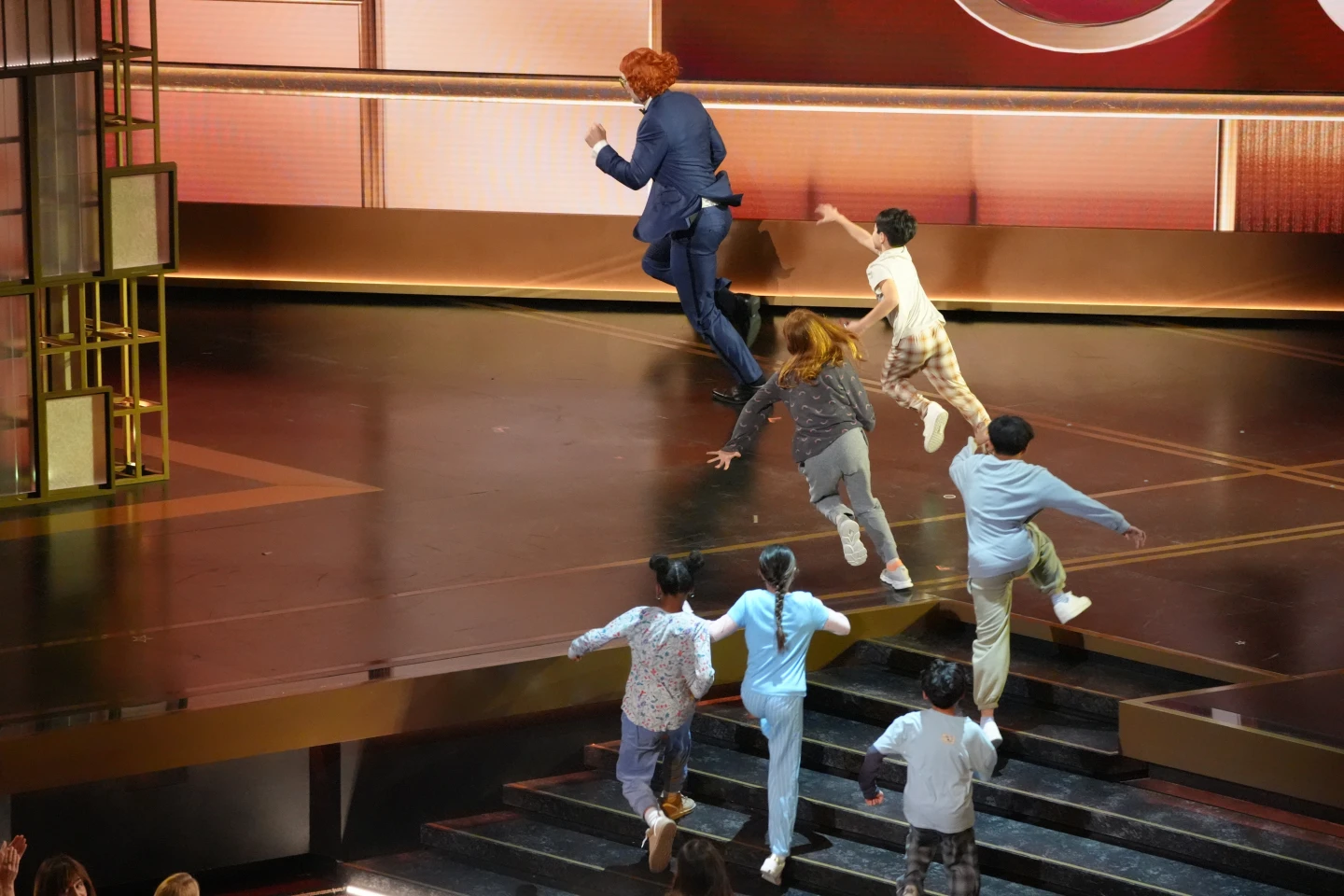
LOS ANGELES (AP) — A horde of children chased host Conan O’Brien onto the Dolby Theatre stage in the opening moments of the 98th Academy Awards, and throughout an Oscar ceremony that saw 'One Battle After Another' win best picture, it felt like they never left.
A palpable concern about the future—both immediate and over generations—pervaded an Academy Awards overshadowed by conflict, political instability, and the implication of an increasingly digital and AI-driven film landscape. These were the high-anxiety Oscars, and amidst it all, efforts were made to generate a sense of optimism.
We pay tribute tonight, not just to film, but to the ideals of global artistry, collaboration, patience, resilience, and that rarest of qualities today — optimism, O’Brien remarked during his opening monologue. We’re going to celebrate. Not because we think all is well, but because we work, and hope for better.
This year’s Oscars struck a distinct contrast to the last ancient ceremony that directly followed a U.S. military engagement in the Middle East in 2003, where the musical Chicago claimed top honors. The focus was certainly different this season, as Anderson’s film—a father-daughter narrative exploring revolution, immigrant detention, and white supremacy—was considered timely, earning it six Oscars and the festival’s centerpiece recognition.
Our film obviously has a certain amount of parallels to what’s happening in the news every day, Anderson observed backstage, reflecting on the film's relevancy while basking in the glow of his first Oscar wins for best director and best adapted screenplay after three decades of filmmaking.
The 98th Academy Awards did not just feature high-profile engagement films but also saw other significant narratives underscoring urgent social issues, offering a thought-provoking perspective against the backdrop of ongoing societal shifts within Hollywood. In an era of exponentially contracting industry space, a robust representation of diverse stories was celebrated as monumental.
O’Brien, referred to himself humorously as potentially the last human host of the Oscars, highlighting that the prestigious awards would be shifting venues from ABC to YouTube in the near future. His comedic approach throughout the ceremony emphasized the changing dynamic of cinema and viewership. The theatrical experience is something that’s a little bit vulnerable right now, stated director Joachim Trier after winning best international film, stressing the need for audiences to support cinema amidst declining attendance rates.
While the evening offered glimmers of hope and tenacity, many winners articulated concerns about the state of the world, with several taking direct political stands. Javier Bardem vehemently stated, No to war, and free Palestine, while others echoed similar sentiments on humanitarian issues and the preservation of a nurturing future for children.
In sum, the evening served not only as a reckoning with the present challenges in Hollywood and beyond but also as a clarion call for artists to remain engaged in shaping a better tomorrow, mirroring the sentiments echoed throughout the evening—the common threads of hope amidst uncertainty for future generations.