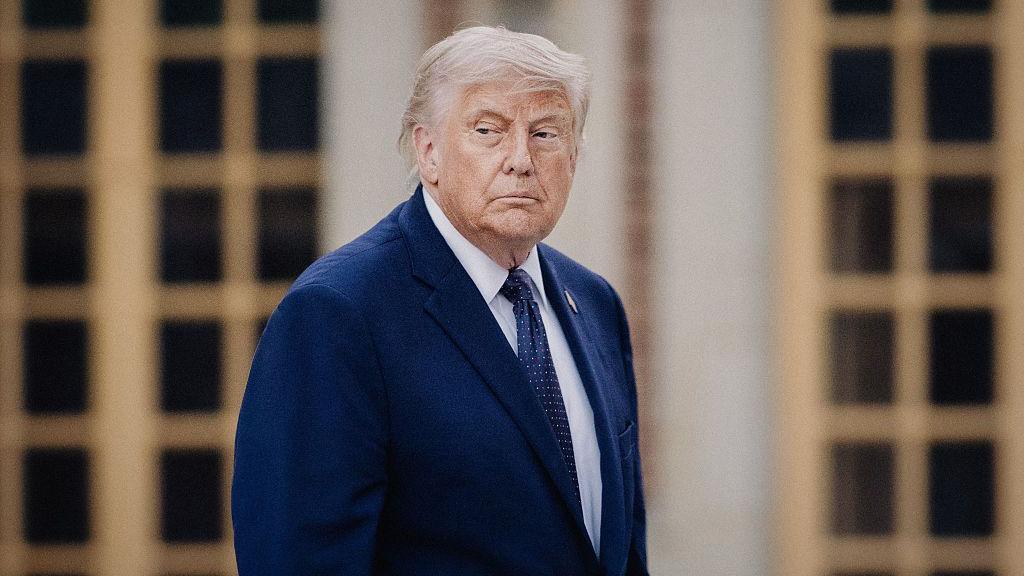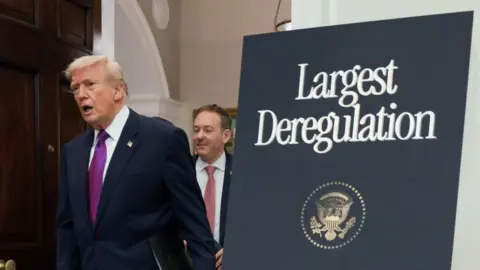
President Donald Trump framed his sweeping rollback of federal climate change policy as a political win over the Democratic Party's 'radical' environmental agenda, reviving a messaging strategy that Republicans have employed in past elections and might lean on as the November midterms approach.
During his announcement at the White House, one of the most significant moves of his second term, Trump declared the revocation of an Obama-era 'endangerment finding' from 2009, which established that pollution harms public health and the environment.
This ruling has been the legal basis for reducing emissions from vehicles, power plants, and other sources of greenhouse gases for nearly two decades. Trump referred to the scientific basis for the ruling as the 'legal foundation for the Green New Scam,' a term that resonates with Republican criticism of Democratic climate policies.
The decision is viewed as a culmination of Trump's ongoing efforts to dismantle climate policies that have been deemed necessary by many experts to combat emissions. Observers characterize it as one of the most significant rollbacks of American climate policy to date.
Trump has consistently rejected the notion of climate change, labeling it a 'hoax' and questioning the science behind it, showcasing a clear split between political ideologies on environmental issues. He argued that abandoning the endangerment finding would be economically beneficial, claiming it would lead to lower energy costs and benefit the US auto industry by eliminating burdensome regulations associated with electric vehicle mandates implemented under the Biden administration.
This rollback has ignited fierce criticism from Democrats and environmental advocates, who argue it jeopardizes the US's ability to tackle climate change effectively. Former President Barack Obama condemned the decision, asserting it would lead to increased risks to public safety and health.
As Trump arms this issue politically, its effectiveness in swaying voter sentiment remains uncertain. Historically, climate change has not ranked high among voter priorities, with economic issues often taking precedence in polls. However, recent studies indicate growing public concern about climate change, suggesting that Trump's approach could be a gamble amid changing public sentiment.
With 63% of Americans expressing worry over global warming according to a 2024 Yale study, the upcoming midterms may prove challenging for Republicans who support Trump's climate deregulatory stance. Ultimately, Trump's invocation of economic arguments against climate policies may not resonate as strongly as he hopes with an increasingly climate-conscious electorate.