The War Dead Pictured on Banned Ukrainian Athlete’s Helmet
Ukrainian skeleton slider Vladyslav Heraskevych's disqualification from the Winter Olympics over his helmet depicting fellow athletes killed since Russia's full-scale invasion is the Games' biggest controversy so far.
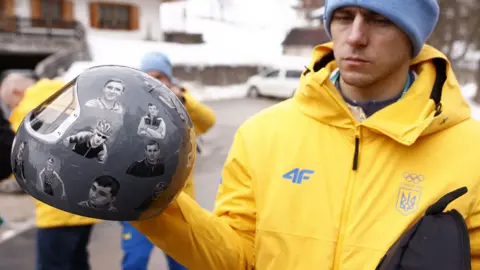
Heraskevych was barred from the men's skeleton in Milan-Cortina earlier this week after he refused to stop wearing his ‘helmet of remembrance’. His appeal to retain the helmet was denied shortly after.
“I wanted to pay my respects,” Heraskevych said of the helmet which honors individuals like teenage weightlifter Alina Perehudova and boxer Pavlo Ishchenko. “They were not just athletes; some were my friends.” The helmet features more than 20 such figures.
This incident not only highlights the ongoing toll of the conflict but also raises questions about the role of athletes and sports within political contexts. The artwork on Heraskevych's helmet illustrates a stark reminder of the casualties faced by Ukraine's sporting community due to the war.
The reaction to his disqualification has been polarized, illuminating the tension between competitive integrity and national pride. While some view his actions as disrespectful to the Olympic spirit, others argue it is a poignant representation of the harsh realities imposed by war.
As discussions continue regarding the implications of such actions on the global sports stage, Heraskevych’s attempt to bring attention to the loss of life mirrors a larger narrative concerning identity, memory, and the consequences of conflict amid the backdrop of international sporting events.