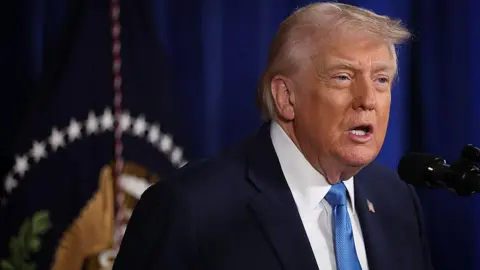
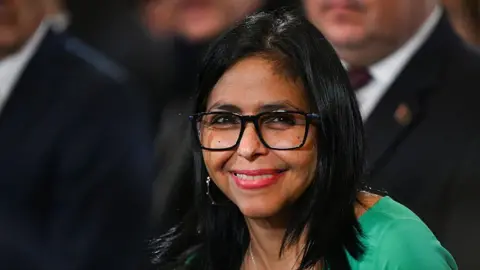
In the wake of recent upheaval in Venezuela, President Trump’s endorsement of Delcy Rodríguez as the interim leader raises several critical questions about US foreign policy and its approach to democracy in the region.
Why did the Trump administration opt for Rodríguez, a close associate of the ousted Nicolás Maduro, over María Corina Machado, the opposition leader who is believed to have garnered significant electoral support?
Experts, including former US ambassador to Venezuela Charles Shapiro, argue that the choice reflects a strategic emphasis on stability rather than a commitment to democratic ideals. They've gone for stability over democracy, Shapiro notes, implying that the US is willing to endorse a transitional figure who can maintain existing power structures without the risks associated with a full regime change.
Critically, some analysts suggest that this decision was shaped by concerns over potential chaos should Machado assume power, which could incite violent opposition among Maduro's still-powerful supporters. A report from the International Crisis Group cautioned that pushing for regime change could lead to unmanageable instability.
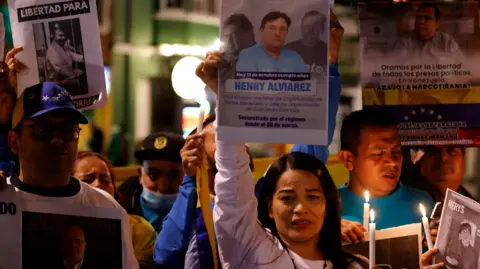
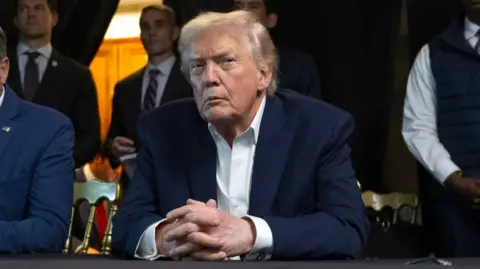
During a press conference, Trump’s dismissal of Machado as not respected further emphasized his administration's priority on immediate stability over political ideals. Such remarks have sparked debate on whether this approach inadvertently undermines the democratic aspirations of a significant segment of the Venezuelan populace.
The rapid shift from Maduro to Rodríguez raises speculation about the potential support she may have received from elements within the regime. However, analysts like Phil Gunson caution against conspiracy theories, emphasizing that key power holders remain committed to the old regime.
With rising expectations that Rodríguez could open the economy to foreign investment and foster collaboration on issues such as counter-narcotics, the Trump administration seems to see her as a pragmatic choice. Nevertheless, the challenges of fostering genuine democratic progress remain daunting, with many experts arguing that addressing the structural issues in Venezuela may take years.
As the political landscape continues to evolve, the long-term implications of Trump's choice to collaborate with Rodríguez instead of the opposition may affect not only Venezuelan society but also the broader geopolitical landscape in Latin America.