In brief
Israel’s 2026 parliamentary election has left the ruling Likud bloc and the opposition coalition both without a clear majority, while Arab parties secure a record 19 seats. The election counted 77.7% voter turnout, the highest since 1999, and the double‑envelope ballots are expected to finish Thursday, setting the stage for months of coalition negotiations.
No single party or bloc has secured an outright majority in Israel’s ongoing parliamentary election, with Prime Minister Benjamin Netanyahu’s right‑wing coalition projected to win 53 seats and the Arab bloc set for a record 19 seats. The vote count, which has reached about 85% of ballots, is still incomplete, as the double‑envelope tickets are expected to finish by Thursday, according to the United Press International source reporting the preliminary results.
Record voter turnout reached 77.7% of eligible voters, the highest since 1999, as the Central Elections Committee noted that nearly 5.7 million of 7.3 million eligible voters cast ballots. The turnout includes a surge among Palestinian citizens of Israel, who accounted for roughly 80% of the votes, exceeding previous levels.
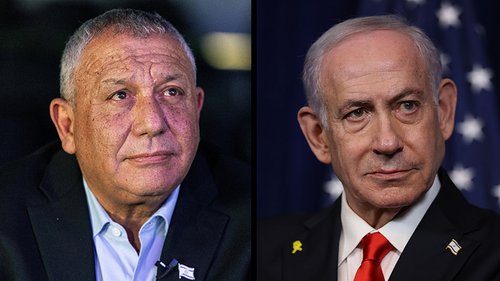
"The preliminary poll results point to complete distrust in Netanyahu and the government of Oct. 7 of the Zionist majority and the majority of Israeli citizens," Gadi Eisenkot said on social media, according to UPI. While Netanyahu claimed that his bloc held a decisive majority among the Jewish and Zionist public, he emphasized that Likud remains the largest party in Israel and called for a “strong, right‑wing, national government.”
Israel’s stock market reacted sharply to the partial results. Tel Aviv stocks fell, with the benchmark TA‑35 index down 1.81% and the TA‑125 down 2.46%, while the TA‑90 and TA‑Banks‑5 indices plunged 4.47% and 4.85% respectively. Senior analyst Gad Lior of Yedioth Ahronoth said the sell‑off was driven by political uncertainty and concerns over another Netanyahu‑led government’s ability to address economic challenges, including a high cost of living.
Shekel‑to‑dollar exchange rates also weakened; the shekel fell 1.62% against the U.S. dollar to 3.128 shekels per dollar, the Bank of Israel’s official rates reported by Xinhua.
Joseph Freiman, CEO of Prico, explained that the shekel’s earlier gains reversed as Netanyahu’s bloc gradually took the lead, shifting investor sentiment. The final tally is expected by Friday, with formal results to be published on 4 November, after which the President will consult party leaders to decide on the next prime minister and the coalition‑building process.