In brief
In a daring mid‑winter mission, an Australian aviation company turned its A319 into a medevac aircraft, landing on a frozen runway at McMurdo Station in Antarctica. After a 12‑hour wait, Skytraders launched from Hobart at dawn and evacuated a US expedition member amid extreme cold and total darkness. The flight—executed just before the winter solstice—demonstrated the crew’s expertise in operating civilian airliners under the toughest conditions. The rescued patient is now recovering in Christchurch, New Zealand.
Australian crew flies into darkness to rescue US researcher in Antarctica
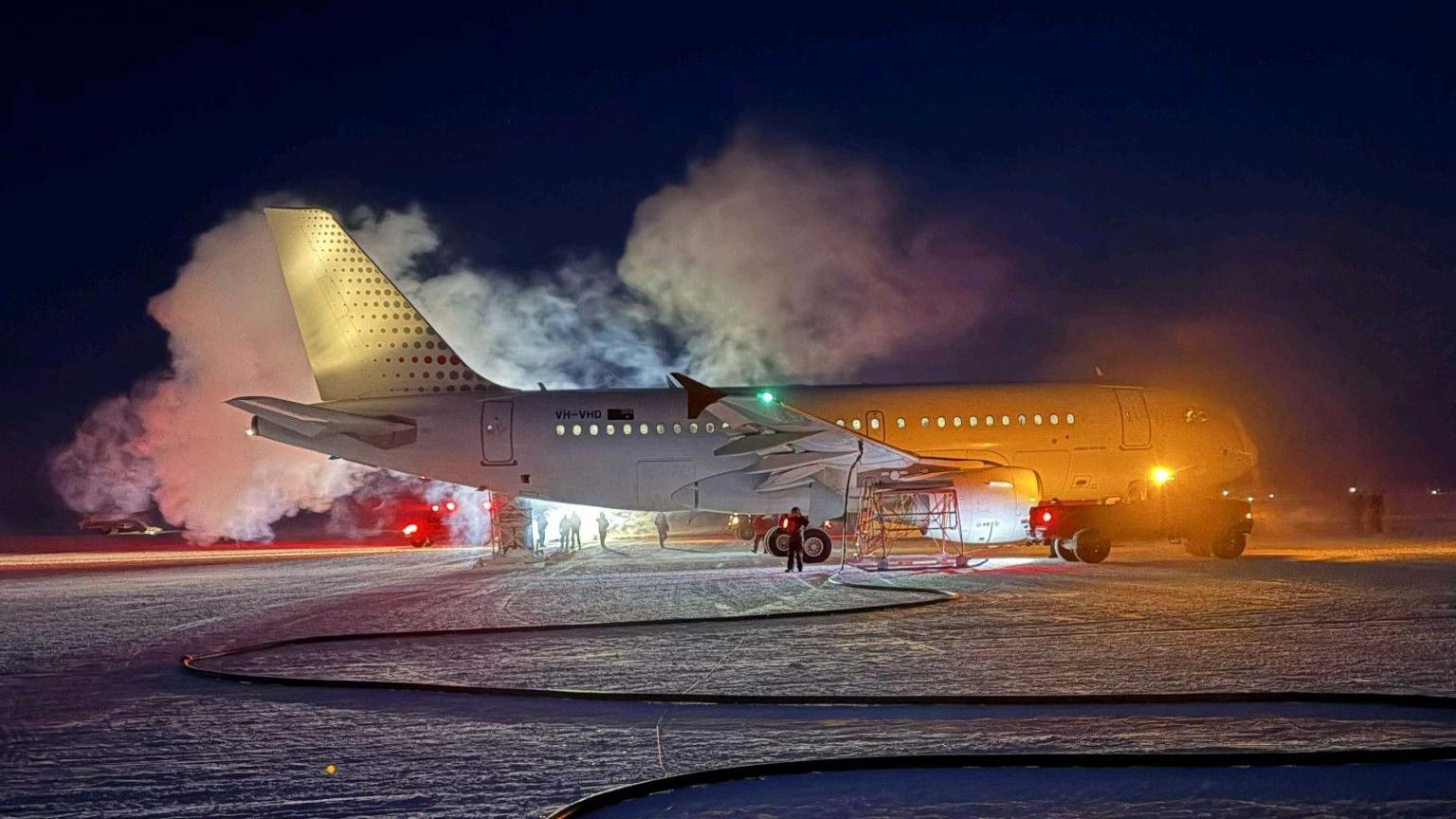
\On Friday morning, Skytraders pilots landed an Airbus A319—known as Snowbird 1—on the icy runway of McMurdo Station, the U.S. research base at the foot of Mount Vernon, in total darkness and a temperature of ‑43°C.
\The operation followed an urgent request for medical evacuation. The Australian company re‑configured the aircraft into a specialised medevac configuration within 24 hours of the call, then waited 12 hours for a suitable weather window before taking off from Hobart at dawn.
\“Skytraders has conducted winter medevacs previously, but never this close to the winter solstice,” said Deputy Chief Executive Duncan Mackay. “An enormous amount of experience and familiarity with the conditions was needed to safely land an airliner on an ice runway in total darkness at ‑43°C.”\
Captain Al Wallach added that every Antarctic mission demands “absolute precision,” and that the conditions they encountered were “right on the edge of even the most specialised aircraft capability.”
\The patient was safely transferred to the aircraft and flown to Christchurch, where he is now recovering well. Skytraders noted that their crew—flight crews, meteorologists, operational planners and medical personnel—worked together to achieve the outcome.
\The rescue marks what the company says is the closest a civilian airliner has operated to the winter solstice (21 June). In 2020, a similar mission evacuated a US program member at –30°C, but this time the temperature dropped to –43°C.
\Source: BBC News (24 Aug 2026).
\