Just over two years ago, when Sheikh Hasina won an election widely condemned as rigged in her favour, it was hard to imagine her 15-year grip on power being broken so suddenly, or that a rival party that had been virtually written off would make such a resounding comeback.
But in the cycle of Bangladeshi politics, this is one more flip-flop between Hasina's Awami League and the Bangladesh Nationalist Party (BNP), which have alternated holding power for decades.
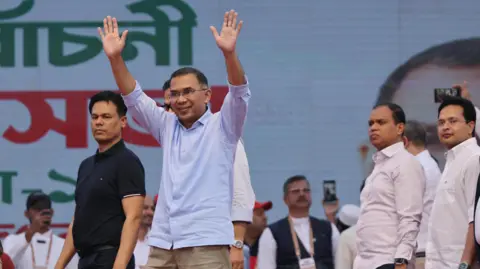
Except this is the first time that new BNP leader Tarique Rahman is formally leading the party - and the first time he's contested an election.
His mother Khaleda Zia, who died of an illness late last year, was the party's head for four decades. She took over after his father, Ziaur Rahman, the BNP founder and a key leader of Bangladesh's war for independence, was assassinated.
Accused of benefitting from nepotism when his mother was in power, Tarique Rahman has also faced allegations of corruption. Five days before his mother died he returned to Bangladesh after 17 years of self-imposed exile in London.
And while Rahman, 60, has on occasion been the de-facto chair of an emaciated BNP when his mother was jailed and more recently when she was ill, he's largely seen as an untested leader.
That he doesn't have prior experience probably works for him, because people are willing to give change a chance, says political scientist Navine Murshid. They want to think that new, good things are actually possible. So there is a lot of hope.
The party says its first priority is to bring democracy back to Bangladesh.
All the democratic institutions and financial institutions, which have been destroyed over the last decade, we have to first put those back in order, senior BNP leader Amir Khasru Mahmud Chowdhury told the BBC shortly after the election was called.
Bangladesh has a long history of such promises being made and broken, with parties becoming increasingly authoritarian once they come to power.
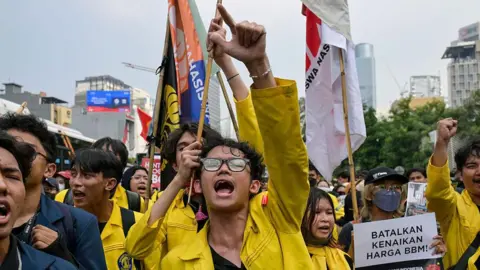
But this time, the country's young, who came out in the July uprising of 2024 that ousted Hasina, appear less tolerant of accepting more of the same.
We don't want to fight again, says Tazin Ahmed, a 19-year-old who participated in the uprising. The stepping down of the previous prime minister was not the victory. When our country runs smoothly without any corruption, and the economy becomes good, that will be our main victory.
Since Hasina was ousted, violence has marred the tenure of Bangladesh's interim leader Mohammad Yunus. Getting a grip on law and order will need to be a key priority for the new government. Reviving the economy, reducing food prices, and creating jobs for Bangladesh's large young population are other massive challenges.
Sociologist Samina Luthfa says the lack of experience of running a government affects all parties. For the Islamist Jamaat-e-Islami, this is its first time winning a sizeable number of seats. Its alliance partner, the National Citizens Party (NCP), won six seats in its debut performance.
As Bangladesh's political landscape evolves under new leadership, the nation's quest for a stable and prosperous future continues amid the shadows of its complex past.