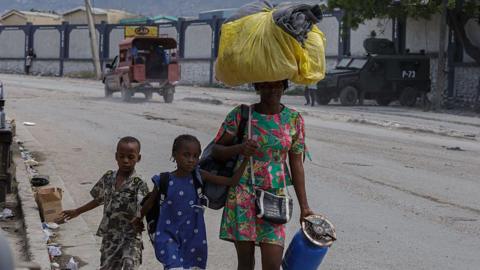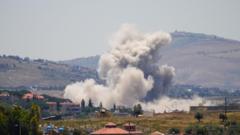
Police are struggling to access a gang-controlled area in central Haiti following a recent wave of attacks that claimed the lives of at least 16 individuals over the weekend. The Gran Grif gang, known for its extreme violence, has reportedly caused the evacuation of around 6,000 residents as they brutally assaulted communities.
While police confirmation stands at 16 deaths, reports from local journalists indicate the number could near 20, and human rights organizations warn that as many as 70 may have perished in the violence. Survivors recounted chaotic scenes from the initial assault that occurred early Sunday, with gang members attacking from various directions, setting homes ablaze and shooting at those who tried to flee the fires.
The violence in Haiti has been escalating for years, with gangs expanding their territory and committing atrocities. The multinational police force deployed to combat gang control has struggled to rein in the worsening situation, particularly in vulnerable rural regions.
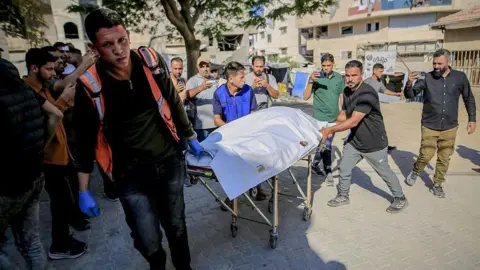
In the aftermath, survivors reported discovering bodies along the roads as the local populace remained too frightened to collect the remains, fearing further attacks. The Haitian ombudsman's office reported that at least 19 people sustained gunshot wounds during the attacks, complicating efforts to determine the full scope of the violence.
Prominent figures, such as Romain Le Cour Grandmaison from the Global Initiative, emphasized the need for investigation into the nature of these attacks, asserting they appeared to be highly coordinated with strategies employed by the gang to stymie police response. There is mounting criticism regarding the authorities' lack of proactive measures despite clear warning signs leading to this weekend's escalations.
One disturbing aspect of this violence is the involvement of a former vigilante leader, known as Ti Kenken, who had shifted allegiances to join the Gran Grif gang. This raises questions about the fluidity of gang affiliations and the potential for further violence as vigilante entities become intertwined with criminal organizations.
The targeted violence in the Artibonite region is not unprecedented; in October 2024, the Gran Grif gang perpetrated a rampage resulting in over 100 deaths, stirring international concern and condemnation. The U.S. has labeled the Gran Grif as a Foreign Terrorist Organization, underscoring the magnitude of the threat they pose to Haitian stability.
The international response includes plans for a new, larger UN-backed Gang Suppression Force that aims to replace the currently deployed multinational police force, expected to arrive in April, as efforts continue to stabilize the turbulent situation in Haiti.