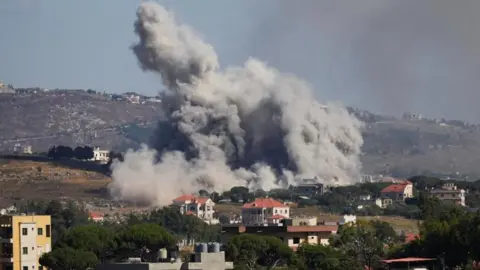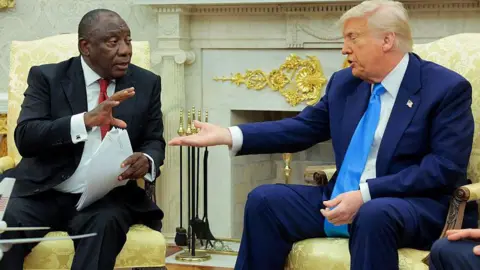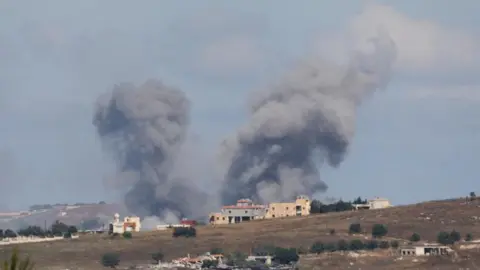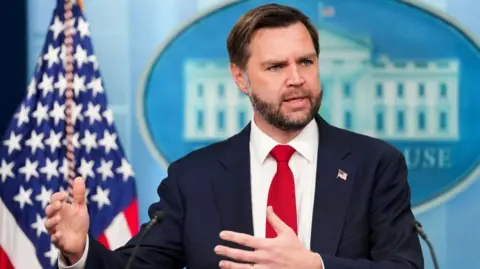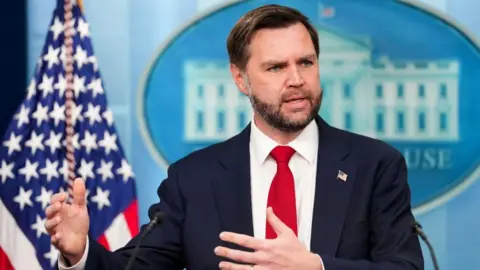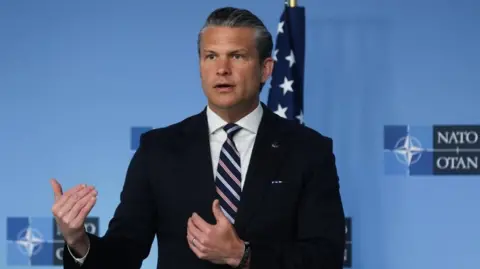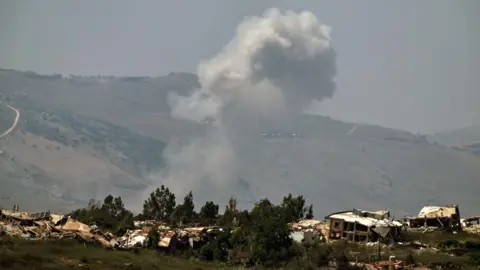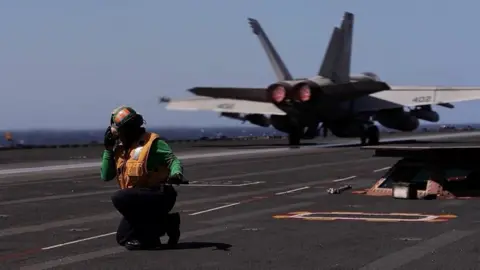
For weeks, the US and Israel have maintained that Iran's military capacity has been severely degraded. US President Donald Trump and Defense Secretary Pete Hegseth have claimed that sustained military strikes have significantly weakened Iran's command and its ability to respond effectively.
Public descriptions by US and Israeli leaders suggest that an end to the conflict should already be on the horizon. However, recent developments indicate an opposite trend, with the conflict intensifying and fewer clear exit strategies available.
Notably, Iran has recently shown it can successfully launch missiles towards distant targets, including a US-UK base on Diego Garcia, raising alarms about its missile range capabilities, previously estimated at 2,000km. This incident has sparked debates on whether Iran's military prowess reflects new advancements or a resilience against ongoing bombardments.
Uncertain leadership dynamics in Iran add another layer of complexity. Following the death of Supreme Leader Ali Khamenei, his successor Mojtaba Khamenei has not publicly emerged, leading to speculation about the continuity of authority amidst operational imperatives.
Despite appearing weakened, Iran's military responses suggest that it maintains coordinated efforts rather than experiencing confusion. Recent missile strikes on Israeli territories indicate that key sites are no longer being spared, challenging the US and Israeli strategy which relies on the expectation of disrupted leadership.
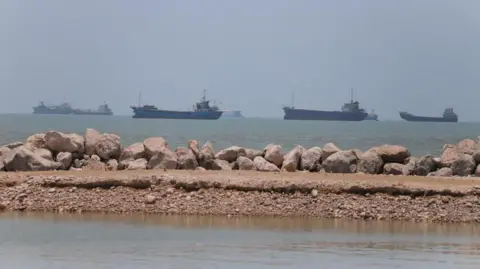
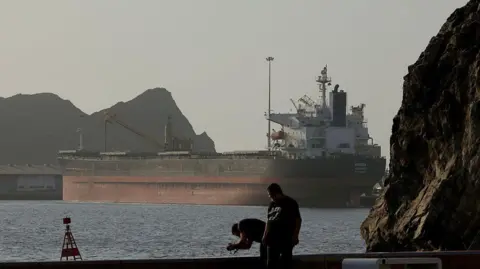
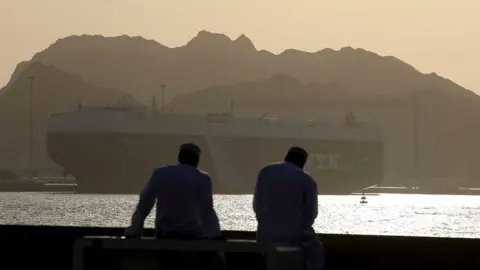
As tensions escalate, choices for both the US and Iran are narrowing. Trump's recent ultimatum for Iran to reopen the Strait of Hormuz under threat of devastation on its energy infrastructure highlights the precariousness of the situation. Iranian leadership has reciprocated with threats of retaliation for any aggression.
In this volatile environment, both nations face significant risks. Iranian officials see little incentive in negotiation amidst American strikes, reinforcing a strategic inference that diplomatic efforts may invite further military action.
With air power unable to achieve decisive victory, and both sides locked in a cycle of escalation, the future portends a precarious balance of power, where any miscalculation could lead to broader conflict and severe ramifications for regional stability.
Public descriptions by US and Israeli leaders suggest that an end to the conflict should already be on the horizon. However, recent developments indicate an opposite trend, with the conflict intensifying and fewer clear exit strategies available.
Notably, Iran has recently shown it can successfully launch missiles towards distant targets, including a US-UK base on Diego Garcia, raising alarms about its missile range capabilities, previously estimated at 2,000km. This incident has sparked debates on whether Iran's military prowess reflects new advancements or a resilience against ongoing bombardments.
Uncertain leadership dynamics in Iran add another layer of complexity. Following the death of Supreme Leader Ali Khamenei, his successor Mojtaba Khamenei has not publicly emerged, leading to speculation about the continuity of authority amidst operational imperatives.
Despite appearing weakened, Iran's military responses suggest that it maintains coordinated efforts rather than experiencing confusion. Recent missile strikes on Israeli territories indicate that key sites are no longer being spared, challenging the US and Israeli strategy which relies on the expectation of disrupted leadership.
As tensions escalate, choices for both the US and Iran are narrowing. Trump's recent ultimatum for Iran to reopen the Strait of Hormuz under threat of devastation on its energy infrastructure highlights the precariousness of the situation. Iranian leadership has reciprocated with threats of retaliation for any aggression.
In this volatile environment, both nations face significant risks. Iranian officials see little incentive in negotiation amidst American strikes, reinforcing a strategic inference that diplomatic efforts may invite further military action.
With air power unable to achieve decisive victory, and both sides locked in a cycle of escalation, the future portends a precarious balance of power, where any miscalculation could lead to broader conflict and severe ramifications for regional stability.