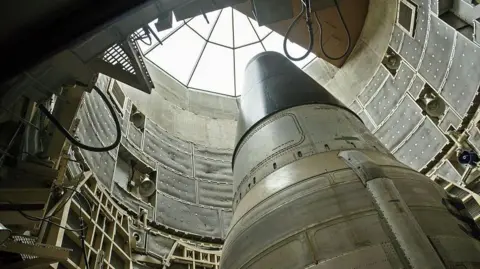
The last nuclear weapons control treaty between the US and Russia is due to expire on Thursday, raising fears of a new arms race.
The Strategic Arms Reduction Treaty, known as 'New START', signed in 2010, was one of a handful of agreements designed to help prevent a catastrophic nuclear war.
The treaty capped the number of deployed strategic nuclear warheads for each party at 1,550, establishing transparency through data transfer, notifications, and onsite inspections.
Its expiration effectively marks an end to the arms control cooperation between Washington and Moscow that helped dissolve the Cold War tensions.
Pope Leo urged both countries to renew the treaty, emphasizing the need to avert an arms race amid current global instability.
Since the original START treaty in 1991, which limited warheads to 6,000 each, the New START agreement has been a crucial framework for nuclear arms reduction. Yet, with rising tensions over Ukraine, Russia suspended its participation three years ago, though both nations ostensibly adhered to the treaty.
The treaty has prevented the uncontrolled buildup of nuclear capabilities and provided critical transparency to avoid misunderstandings regarding each other's intentions.
Other long-standing arms control agreements have also faltered. These treaties, such as the Intermediate-Range Nuclear Forces Agreement and the Open Skies Treaty, have historically contributed to global security.
Concerns escalate as Britain's former head of armed forces warned that the frameworks that maintained global stability are now at risk of unraveling.
Statements from Russian officials highlight apprehensions about the expiration, suggesting its implications should alarm the international community.
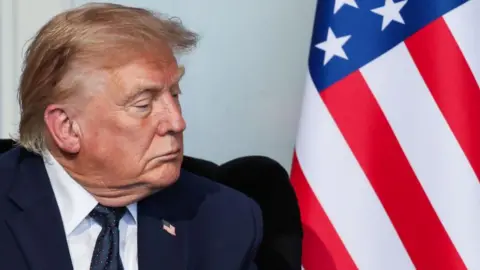
On the conduct of arms policy, US President Trump remarked on the matter casually, dismissing the expiry as a potential for a better agreement, while the US seeks to include China in future negotiations—an added complexity.
Experts like Darya Dolzikova express fears that expanding military capabilities from both sides could hinder any forthcoming arms control negotiations.
This period of uncertainty points toward a more volatile future, as both countries advance their nuclear capabilities while global norms and treaties dissolve.