Five dead in Miami Airport cargo plane crash: investigations underway
A Boeing 767‑300 cargo aircraft operated by Amazon Air crashed in the early afternoon on March 26, 2026, while attempting to land at Miami International Airport (MIA). The aircraft overran the diagonal runway, burned, and struck several ground vehicles. Five people were killed and five others were injured, with three of the injured in critical condition.
The flight had departed from Luis Muñoz Marín International Airport in San Juan, Puerto Rico, and was traveling at 112 knots (≈129 mph) when it left the usable portion of the runway. Weather at the time consisted of light thunderstorms and gusting winds, but the FAA has yet to attribute the incident to any single factor. The National Transportation Safety Board announced it would review the accident and hold a press conference the following day.
Federal Aviation Administration officials grounded all aircraft at MIA immediately after the crash as fire crews fought a flaming wreck and addressed a lingering fuel leak. The incident coincided with one of the busiest travel weekends in the United States, with the Transportation Safety Administration projecting 17 million travelers worldwide in the week before the Labor Day holiday and 2.3 million passengers on Sunday alone.
Amazon issued a statement calling the accident "heart‑breaking" and expressing condolences to the victims’ families. The company emphasized its cooperation with local authorities and its commitment to full investigation. 21 Air, the charter operator, has yet to comment on the event.
Miami‑Dade Mayor Daniella Levine Cava said rescue teams arrived within minutes, focusing on immediate medical response and the safety of surrounding businesses. Fire Chief Raied Jadallah reported that several injured individuals were trapped under or within vehicles at the crash scene and required extensive extrication.
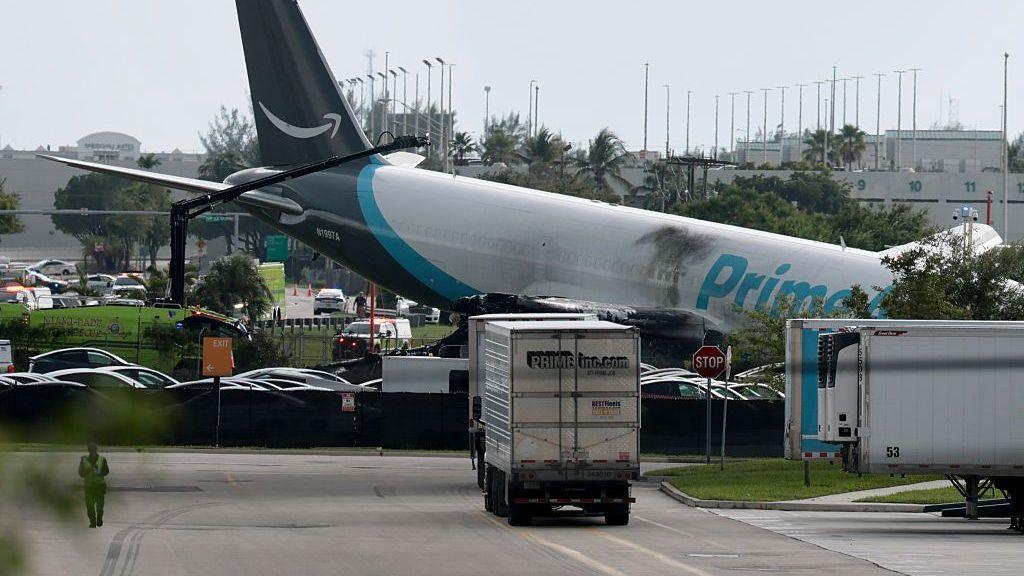
The plane’s final position—a heavily damaged, overturned fuselage leaning at a sharp angle—was captured in an image from Getty Images. The aircraft sits on a parking lot servicing an Amazon warehouse, demonstrating the proximity of commercial logistics to flight operations at MIA, which has been cited as America’s busiest airport for international freight.
The incident has reignited discussions about cargo airline safety, the adequacy of runway designs for large aircraft, and the preparedness of emergency services at high‑volume airports. Analysts note that while similar overruns have occurred in the past, the combination of a busy holiday traffic, regulatory oversight, and corporate responsibility makes this crash a critical case study for aviation safety reforms.
The National Transportation Safety Board’s upcoming investigation will likely examine pilot decision‑making, runway length and composition, aircraft maintenance records, and the coordination between the operator and airport authorities. Meanwhile, the FAA’s temporary grounding of flights at MIA illustrates the regulatory consequences that can follow after a fatal accident.