Ghana’s new law threatens bus preaching tradition
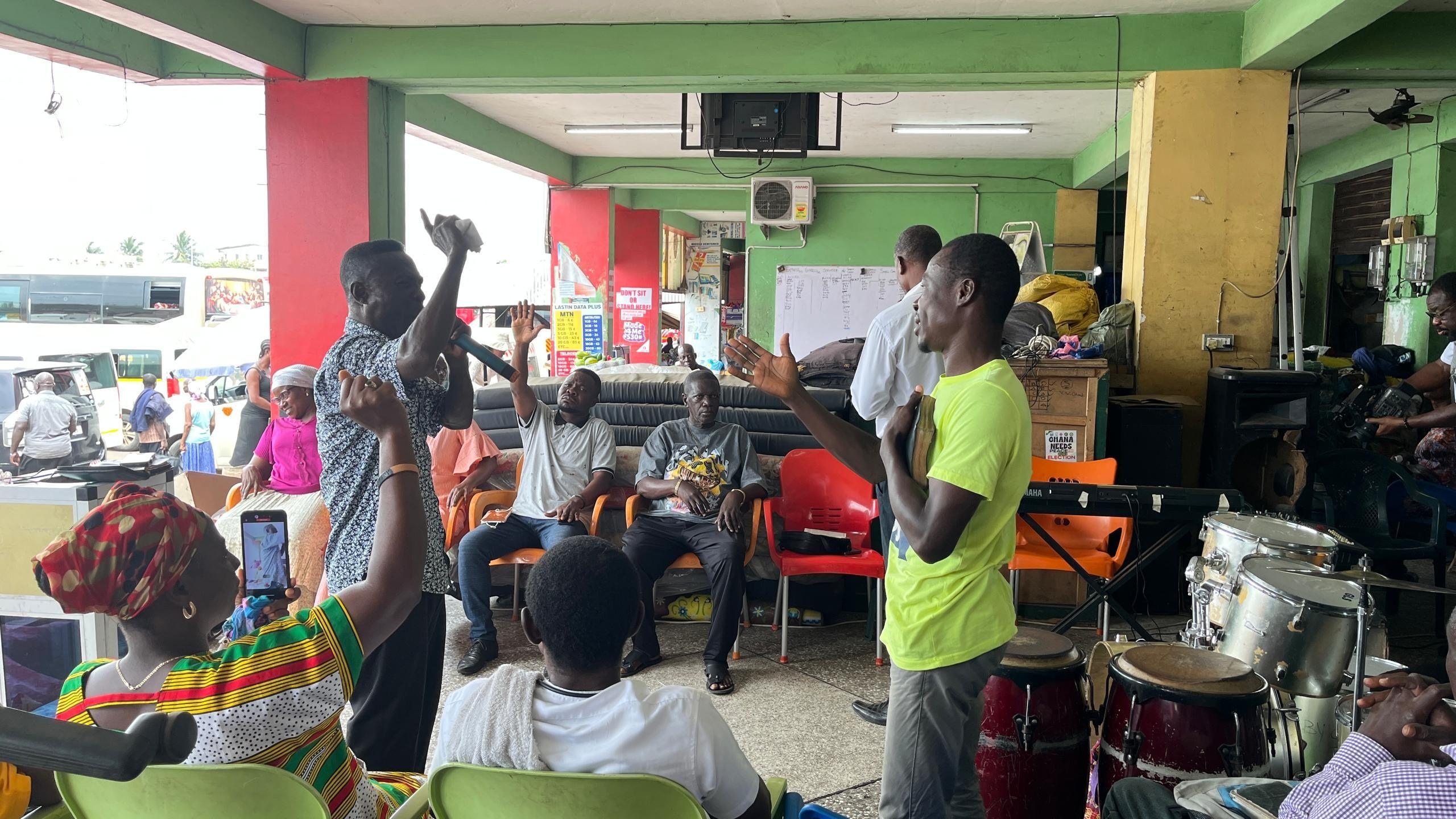
Before the morning rush begins, the sound of praise and worship fills the Neoplan bus station in Accra as a group of Christians gather to prepare to evangelise on vehicles taking travellers across the country.
Boateng Bismark James leads thirteen worshippers in prayer for drivers and passengers travelling to destinations across Ghana. He has been preaching on commercial vehicles leaving the bus station since 2023, saying many people cannot attend church on Sunday and need the message of salvation.
On long‑distance buses pastors often stand in stairwells next to the driver or walk the aisle, calling on sinners to repent at the tops of their voices. The practice is common in Ghana, a predominantly Christian country, and sometimes includes the selling of religious material.
The new regulation passed by parliament in May now bans preaching and hawking on moving vehicles as a nuisance and a potential safety risk, imposing up to eight months’ imprisonment or a fine of up to $52 (£39). Enforcement has already begun in recent weeks.
Critics argue that moving vehicles present a safety risk and that the practice is a nuisance, while opponents see it as a religious duty protected by freedom of worship. One passenger, who prefers to travel in peace, said the preaching was a nuisance because of noise and saliva.
Supporters point to Ghana’s high level of religious observance, noting that evangelism on public transport is a way of reaching people who may not attend church. A passenger travelling to Kumasi said pastors should be allowed to preach but only with passengers’ consent, and that the message can give passengers renewed hope.
Boateng is concerned about the new rules, as most pastors here depend on preaching to support their families through monetary gifts from passengers. He requested an exemption, saying the government should allow preaching on the buses and alight when the vehicle exits Accra.
Pastors face a difficult choice between adapting their ministry, giving up a source of income, or risking legal penalties. The law has raised questions about the balance between religious freedom and public safety, and the future of a visible form of evangelism on Ghana’s roads remains uncertain.