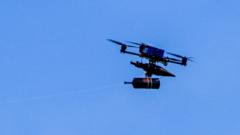
Hezbollah, the Shia militant organization that controls southern Lebanon, has adopted fiber‑optic drones as its primary weapon against Israel. These small, low‑flight devices use a thin optical cable to connect the drone to a ground‑based operator, allowing the operator to guide the drone in real time. Unlike the rockets it has fired for decades, the drones carry explosives, fly at low altitude, and have no radio signal that can be jammed by Israel’s electronic warfare assets.
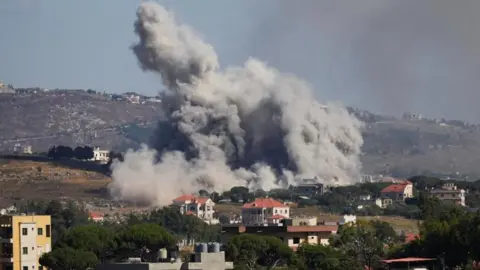
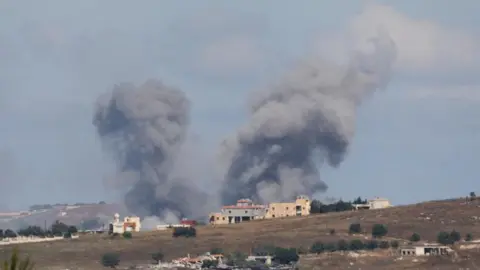
The change in tactics follows a ceasefire that went into effect in early April, after six weeks of fighting that left casualties on both sides. Since the ceasefire, Israeli soldiers and civilians have been hit by at least 11 attacks, including one fatality and several injuries. Eight of those casualties were due to fiber‑optic drones, according to the Israeli Defense Forces’ (IDF) casualty report.
We started seeing a lot more of these weapons after the ceasefire, says Elias Khatib, a senior analyst at the Alma Research Center, an Israeli think tank that monitors Hezbollah activity. Hezbollah was smart to learn from Ukraine. When the IDF began intercepting rockets, they switched to drones to maintain pressure on Israel without violating the ceasefire agreement. The Alma Center estimates that Hezbollah’s drone fleet comprises dozens of trained operators and costs only a few hundred dollars each.
In the town of Shomera, near the border, residents describe waking to sirens that sound seconds before a drone passes overhead. No warning to escape, says council chief Sami Zanetti. If you run, the drone follows. The soldiers rush in and shoot it down, but the danger remains persistent. He describes the scene where a bus‑stop was scarred by a drone that exploded minutes after a school bus left.
Israel’s military officials have expressed urgency about countering this new threat. Captain Adi Stoler, a spokesperson for the IDF, said in a statement: We are rapidly developing interception methods and will continue to invest heavily in anti‑drone technology. The system is a central mission for the Northern Command, as the drones can bypass traditional defenses. The IDF announced that it has begun covering sensitive positions with netting to trap and entangle the drones, and several defense companies are working on autonomous weapon systems that could shoot down an approaching drone with minimal human intervention.
Hezbollah, for its part, frames the drones as a means of protecting civilians and achieving strategic goals. With rockets ending due to the ceasefire, we now have an instrument that allows us to penetrate the border without direct confrontation, claims a spokesperson from the organization. When Israeli soldiers take out our drones, we can turn our attention to civilian targets, sending a clear message of deterrence.
The policy debate within Israel is heated. Some politicians urge a stronger response, arguing that the drones are a prelude to a broader conflict with the Lebanese state and Iran. Finance Minister Bezalel Smotrich, in a recent address, suggested that for each drone attack on an Israeli soldier, a retaliatory operation should target infrastructure in Beirut’s southern districts. Prime Minister Benjamin Netanyahu later pledged that Israel would bring a “crushing blow” to counter the threat, while confirming the formation of a special task force to deal with these devices.
The situation reflects a broader pattern of conflict escalation seen in other regions, where low‑cost unmanned systems fill gaps left by conventional deterrence. The IDF’s experience in fighting drones fired by Ukraine indicates that adaptation is possible but requires resources. The current challenge for Israel is to keep pace with Hezbollah’s rapid deployment of fiber‑optic drones and to protect civilians on both sides of the border.
Meanwhile, Hezbollah’s use of social media to release edited footage of drone strikes adds a psychological dimension to the conflict. Videos show drones launched towards Israeli military vehicles, ending with the drone detonating mid‑air. The organization’s propaganda aligns with its operational objectives, aiming to influence public perception around the world.
As the ceasefire’s language continues to be contested, with some arguing that it should be limited only to the Lebanese state and not extend to Hezbollah, the tension remains. Whether Israel can effectively counter the new drone threat while avoiding escalation with Iran-backed forces remains an open question for the coming weeks.
This development shows how lessons learned from one theatre of war can spread rapidly, altering the dynamics of regional conflicts and prompting a constant cycle of arms innovation and counter‑measures.}
The change in tactics follows a ceasefire that went into effect in early April, after six weeks of fighting that left casualties on both sides. Since the ceasefire, Israeli soldiers and civilians have been hit by at least 11 attacks, including one fatality and several injuries. Eight of those casualties were due to fiber‑optic drones, according to the Israeli Defense Forces’ (IDF) casualty report.
We started seeing a lot more of these weapons after the ceasefire, says Elias Khatib, a senior analyst at the Alma Research Center, an Israeli think tank that monitors Hezbollah activity. Hezbollah was smart to learn from Ukraine. When the IDF began intercepting rockets, they switched to drones to maintain pressure on Israel without violating the ceasefire agreement. The Alma Center estimates that Hezbollah’s drone fleet comprises dozens of trained operators and costs only a few hundred dollars each.
In the town of Shomera, near the border, residents describe waking to sirens that sound seconds before a drone passes overhead. No warning to escape, says council chief Sami Zanetti. If you run, the drone follows. The soldiers rush in and shoot it down, but the danger remains persistent. He describes the scene where a bus‑stop was scarred by a drone that exploded minutes after a school bus left.
Israel’s military officials have expressed urgency about countering this new threat. Captain Adi Stoler, a spokesperson for the IDF, said in a statement: We are rapidly developing interception methods and will continue to invest heavily in anti‑drone technology. The system is a central mission for the Northern Command, as the drones can bypass traditional defenses. The IDF announced that it has begun covering sensitive positions with netting to trap and entangle the drones, and several defense companies are working on autonomous weapon systems that could shoot down an approaching drone with minimal human intervention.
Hezbollah, for its part, frames the drones as a means of protecting civilians and achieving strategic goals. With rockets ending due to the ceasefire, we now have an instrument that allows us to penetrate the border without direct confrontation, claims a spokesperson from the organization. When Israeli soldiers take out our drones, we can turn our attention to civilian targets, sending a clear message of deterrence.
The policy debate within Israel is heated. Some politicians urge a stronger response, arguing that the drones are a prelude to a broader conflict with the Lebanese state and Iran. Finance Minister Bezalel Smotrich, in a recent address, suggested that for each drone attack on an Israeli soldier, a retaliatory operation should target infrastructure in Beirut’s southern districts. Prime Minister Benjamin Netanyahu later pledged that Israel would bring a “crushing blow” to counter the threat, while confirming the formation of a special task force to deal with these devices.
The situation reflects a broader pattern of conflict escalation seen in other regions, where low‑cost unmanned systems fill gaps left by conventional deterrence. The IDF’s experience in fighting drones fired by Ukraine indicates that adaptation is possible but requires resources. The current challenge for Israel is to keep pace with Hezbollah’s rapid deployment of fiber‑optic drones and to protect civilians on both sides of the border.
Meanwhile, Hezbollah’s use of social media to release edited footage of drone strikes adds a psychological dimension to the conflict. Videos show drones launched towards Israeli military vehicles, ending with the drone detonating mid‑air. The organization’s propaganda aligns with its operational objectives, aiming to influence public perception around the world.
As the ceasefire’s language continues to be contested, with some arguing that it should be limited only to the Lebanese state and not extend to Hezbollah, the tension remains. Whether Israel can effectively counter the new drone threat while avoiding escalation with Iran-backed forces remains an open question for the coming weeks.
This development shows how lessons learned from one theatre of war can spread rapidly, altering the dynamics of regional conflicts and prompting a constant cycle of arms innovation and counter‑measures.}