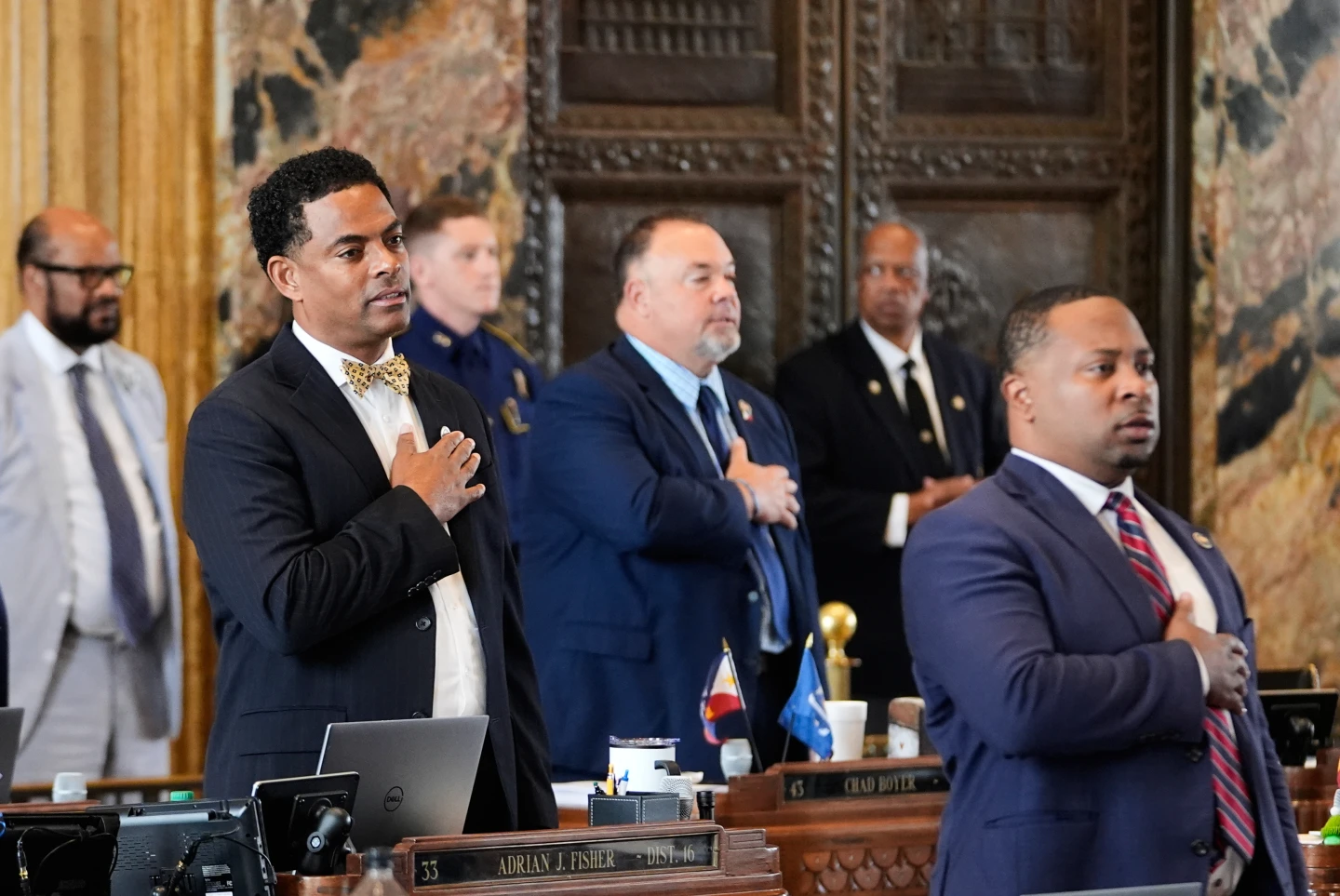
Louisiana lawmakers voted Friday to adopt a new congressional map that is expected to give Republicans a viable bid for all six seats in the state’s House delegation. The change comes a month after the U.S. Supreme Court struck down Louisiana’s existing map as an illegal racial gerrymander, a decision that effectively weakens the 1965 Voting Rights Act and has ignited a nationwide redistricting battle. In the new plan, Democratic Rep. Cleo Fields’ district is being reconfigured to surround white‑majority suburbs of Baton Rouge, while Baton Rouge’s white voting bloc is annexed to the majority‑Black, Democratic‑leaning district centered in New Orleans currently represented by Rep. Troy Carter. Democrats accuse the proposal of packing Black voters into a single district, echoing concerns from the Supreme Court’s earlier ruling that the previous map’s removal of a majority‑Black district violated federal law.
The governor is anticipated to sign the map into law, after Republicans, who currently control four of six seats, consider it a strategic move to safeguard U.S. House Speaker Mike Johnson’s reelection prospects. While the new map appears to bolster Republican influence, it remains uncertain whether it will secure a majority in the House, as the GOP’s broader redistricting strategies could net up to 14 seats nationwide, whereas Democrats estimate gains of six seats through California and Utah.
Louisiana is not alone: Florida’s Legislature rapidly adopted new congressional districts just hours after the Supreme Court’s decision, a reshuffle that could hand the state four additional seats in the midterms. Tennessee followed suit a week later, carving up a majority‑Black district in Memphis in a bid to win an extra GOP seat. In Alabama, Republicans are attempting to change two districts that have a Black majority, a proposal already entangled in legal challenges. Meanwhile, South Carolina’s Senate has declined to alter its district map, despite pressure from President Trump. These states underscore the growing influence of the court’s loosening of the Voting Rights Act and the broader conflict over how congressional districts are drawn.
The redistricting initiative in Louisiana also reflects broader national concerns: the Supreme Court’s ruling has prompted several Southern states to push forward with reconfigured maps, further intensifying the political calculus ahead of the November elections. The potential for lawsuits remains high, as the new map could still be contested as a violation of federal anti‑discrimination provisions. The outcome will be closely watched by political analysts and civil‑rights advocates alike as the race for control of the U.S. House continues to intensify across the country.
The governor is anticipated to sign the map into law, after Republicans, who currently control four of six seats, consider it a strategic move to safeguard U.S. House Speaker Mike Johnson’s reelection prospects. While the new map appears to bolster Republican influence, it remains uncertain whether it will secure a majority in the House, as the GOP’s broader redistricting strategies could net up to 14 seats nationwide, whereas Democrats estimate gains of six seats through California and Utah.
Louisiana is not alone: Florida’s Legislature rapidly adopted new congressional districts just hours after the Supreme Court’s decision, a reshuffle that could hand the state four additional seats in the midterms. Tennessee followed suit a week later, carving up a majority‑Black district in Memphis in a bid to win an extra GOP seat. In Alabama, Republicans are attempting to change two districts that have a Black majority, a proposal already entangled in legal challenges. Meanwhile, South Carolina’s Senate has declined to alter its district map, despite pressure from President Trump. These states underscore the growing influence of the court’s loosening of the Voting Rights Act and the broader conflict over how congressional districts are drawn.
The redistricting initiative in Louisiana also reflects broader national concerns: the Supreme Court’s ruling has prompted several Southern states to push forward with reconfigured maps, further intensifying the political calculus ahead of the November elections. The potential for lawsuits remains high, as the new map could still be contested as a violation of federal anti‑discrimination provisions. The outcome will be closely watched by political analysts and civil‑rights advocates alike as the race for control of the U.S. House continues to intensify across the country.