In brief
Hundreds of thousands marched across France on Saturday, demanding relief from rising living costs and critiquing the government. Police deployed nearly 70,000 officers, employing tear gas, water cannon and even elite units to quell disturbances. Clashes erupted in Paris, Marseille and Bordeaux, with some protesters setting barricades on fire and vandalising property. Authorities arrested close to 1,000 participants, and a total of 1,000 police were injured. The unrest comes amid nationwide frustration and looming presidential elections.
Nearly 1,000 arrests were made as hundreds of thousands marched across France on Saturday, part of a nationwide protest wave that has escalated over weeks.
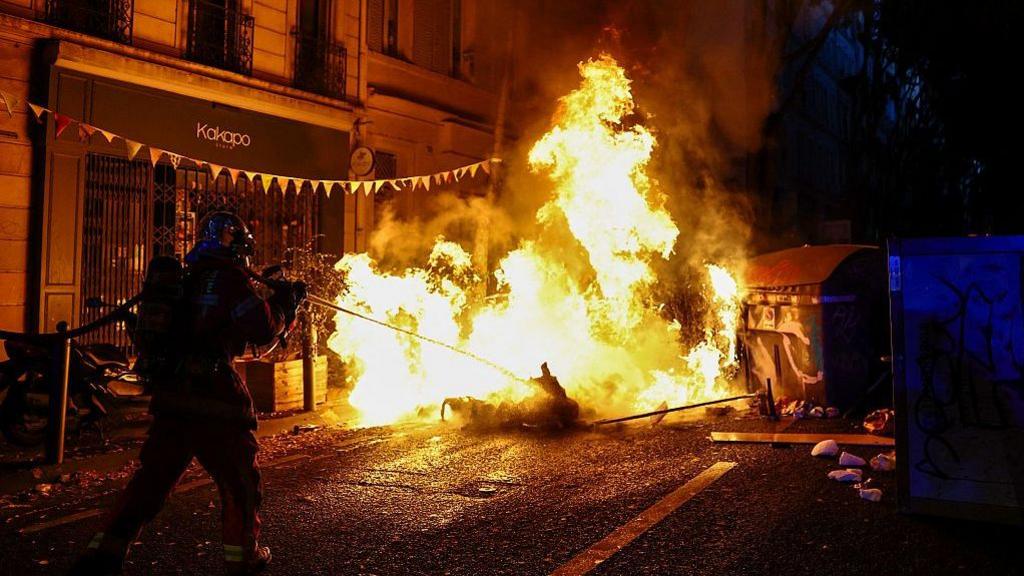
Police used tear gas and water cannon to disperse crowds in major cities, while barricades caught fire in Marseille and French authorities set fire‑proof rules to curb looting. An estimated 410,000 protestors took part in Paris according to the Interior Ministry, though unions claimed about 800,000.
In Paris, a peaceful march from Porte d’Italie to Porte de Vincennes turned violent when a group of masked youths surged toward police, prompting a baton charge and eventual clampdown. Sparked by anger over cost of living, poor school conditions, and a crackdown on unregistered marches, tensions spilled into several towns.
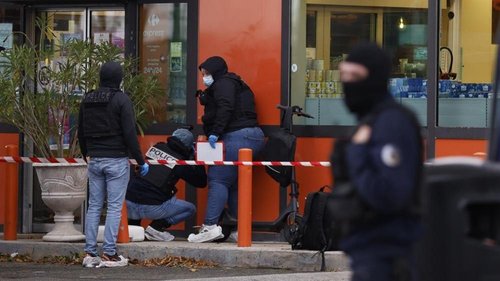
Paris police, reinforced by an elite counter‑terrorism unit, fired tear‑gas grenades in Lyon where a crowd had gathered in a restricted zone. Officials also noted that about 500 individuals were identified as actively provoking riots.
In Marseille, makeshift barricades were lit on fire, blocking streets, while in Bordeaux protesters stripped boards from a shop to build a breach. Two people suffered serious injuries in Toulouse and Clermont‑Ferrand.
The French interior minister warned that the total arrests would rise as use of ‘fast‑track’ court hearings proceeds, with cases for vandalism, arson and looting already in motion.
Youth voices dominated the streets: a 26‑year‑old protester told reporters their frustration had boiled over after months of government inertia while teenagers called for meaningful change. Adhering to the backdrop of a national mobilization that spanned Europe—from Tirana to Milan—France’s unrest underscores the growing pressure on President Macron’s administration.
With the presidential election scheduled in six months, all sides are weighing responsibility for the chaos, signalling a critical moment ahead for French governance."